Demis Hassabis & Isomorphic Labs – How AI-First Drug Discovery Could Rewrite the Rules for Indian Pharma
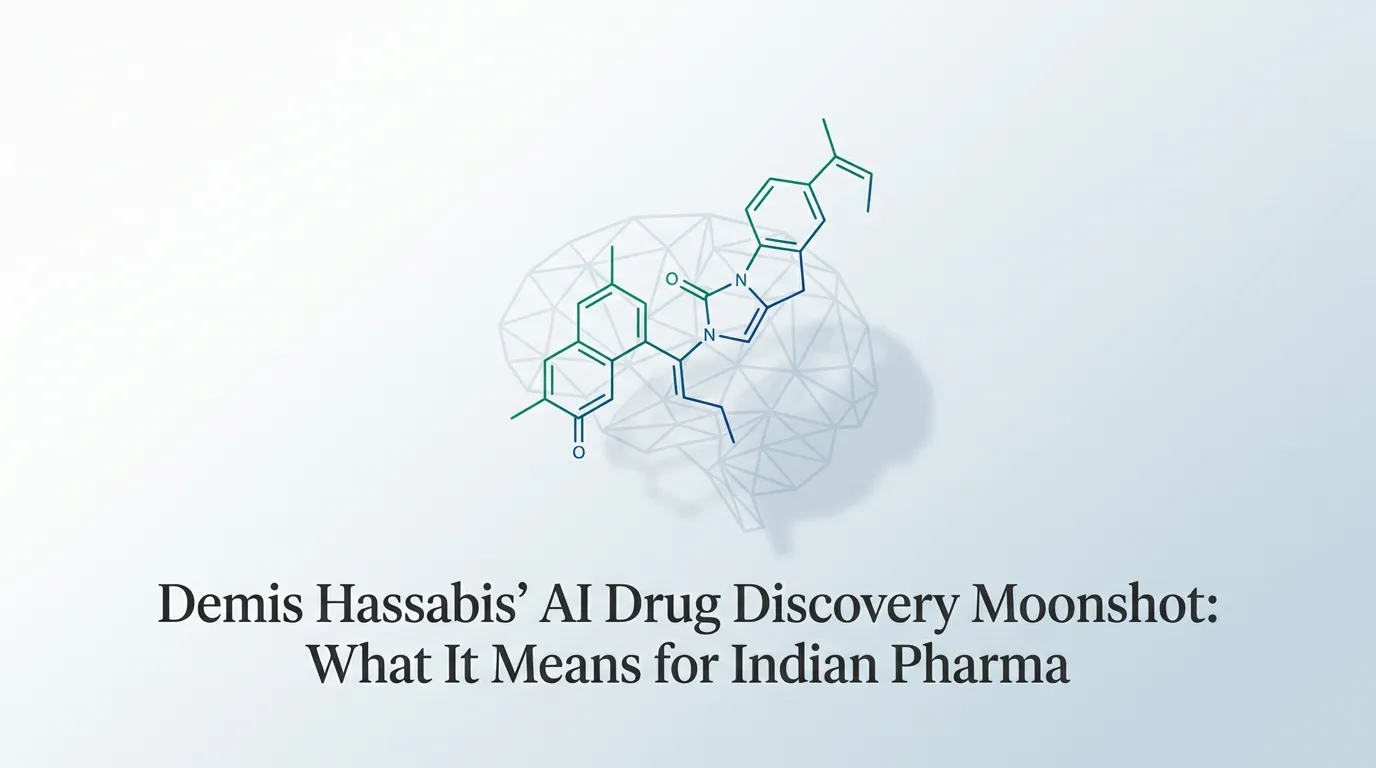
DeepMind co-founder Demis Hassabis became a billionaire in March 2026 when Alphabet spun out Isomorphic Labs into a standalone entity valued at $3.8 billion post-money. The company’s AlphaFold 3 model (released late 2025) already predicts protein–ligand interactions with 85–92 % accuracy, slashing early-stage drug discovery timelines from 4–7 years to 12–24 months in several therapeutic areas.
For India, home to the world’s third-largest pharma industry by volume and the undisputed leader in generic APIs. This is both an existential threat and the biggest opportunity since the 2005 product-patent regime.
The threat side is clear and brutal If AI reduces discovery cost by 60–80 % and time by 70 %, large pharma companies will bring far more molecules in-house instead of outsourcing to Indian CROs and CDMO players. Indian firms that live on “me-too” generics and incremental reformulations could see 25–40 % of their R&D services revenue evaporate over the next 5–7 years.
The opportunity side is even bigger India has three structural advantages no other country can match right now:
- Massive real-world patient data — 1.4 billion people, high disease burden, and digitisation of health records (Ayushman Bharat Digital Mission) give Indian AI-pharma startups access to training datasets that US/EU firms can only dream of.
- Lowest cost of clinical trials — Phase II/III trials in India cost 40–65 % less than in the US. AI-discovered molecules can be validated here faster and cheaper.
- Existing manufacturing muscle — Once a molecule is validated, India can scale production at 1/5th–1/10th the cost of Western plants.
Early movers are already capitalising:
- Several Bengaluru and Hyderabad AI-biotech startups raised $80–220 million in Q4 2025–Q1 2026 by partnering with Isomorphic, Recursion or Exscientia to run India-first clinical programs.
- Sun Pharma, Dr Reddy’s and Cipla quietly built internal AI teams of 180–320 people each and are now running AlphaFold-augmented discovery pipelines.
- Global funds (ARCH, Flagship, a16z Bio) are opening India desks specifically to back “AI + India trials + India manufacturing” stories.
Practical playbook for Indian players in 2026:
- If you’re a CRO/CDMO — pivot hard into AI-validated molecule scale-up and bio-manufacturing.
- If you’re a pharma major — treat AI as a core R&D engine, not a side project.
- If you’re a founder — build around India’s data + trial cost + manufacturing trifecta. The next $5–10 billion Indian biotech unicorn will almost certainly come from this exact intersection.
Demis Hassabis didn’t just build a better model, he built a better drug-discovery economics. India has the raw ingredients to ride that wave all the way to the top of the global value chain but only if we move very fast.