
Diverging Global Markets: Emerging Asia Leads While Europe Lags in AI-Driven Recovery
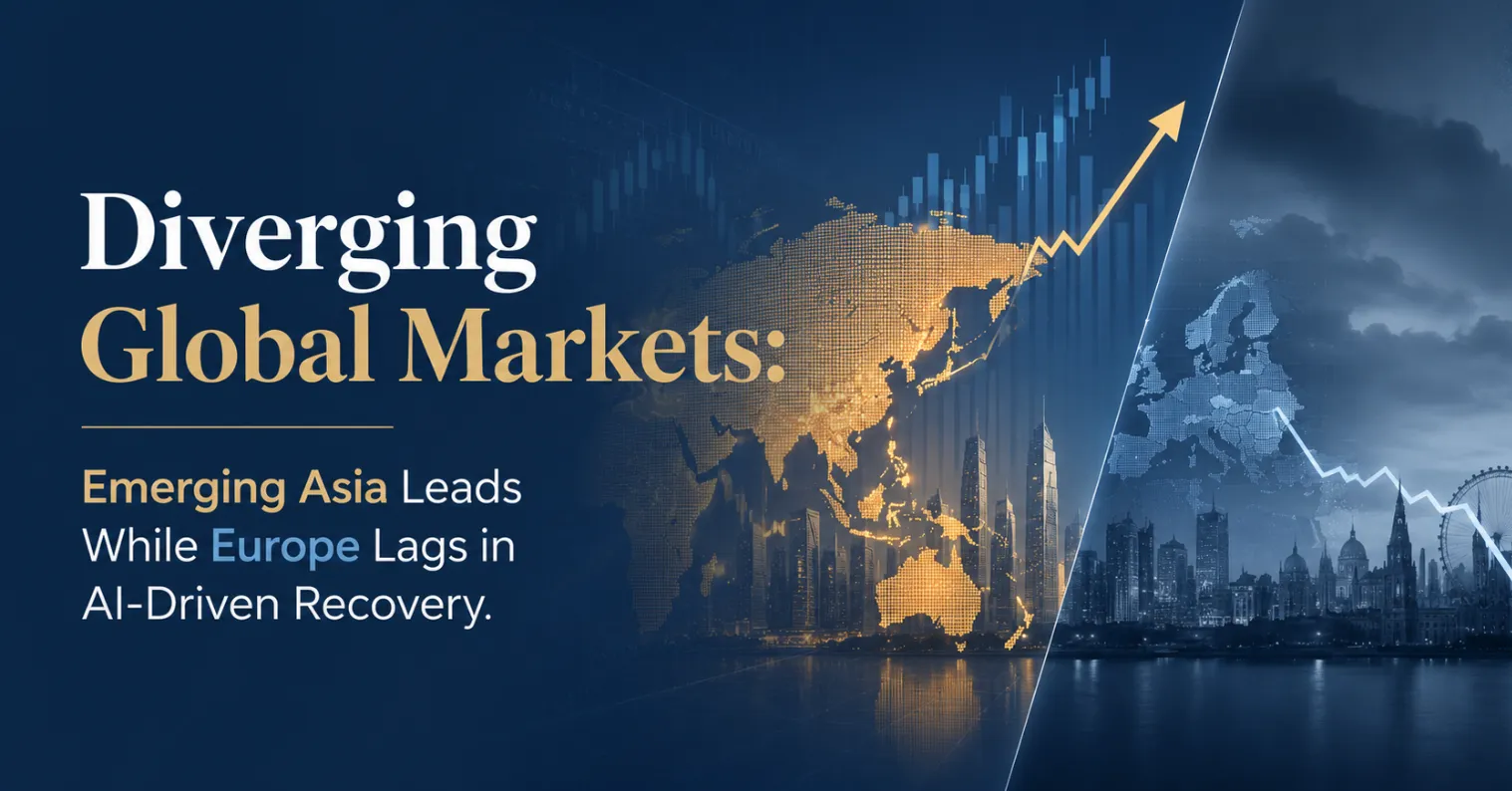
In the fast-paced world of global finance, June 2026 has highlighted a clear split: Emerging Asia is charging ahead, fueled by massive AI and semiconductor bets, while Europe is playing catch-up amid lingering energy headaches and thinner exposure to the hottest tech trends. This divergence isn't just a blip on the charts, it's reshaping investment flows, supply chains, and growth outlooks worldwide, with important signals for Indian companies eyeing international expansion or partnerships.
The numbers tell a compelling story. South Korea’s KOSPI index hit fresh record highs in May and continued momentum into June, powered by giants like Samsung and SK Hynix. These firms are at the heart of the memory-chip and high-bandwidth memory boom that’s supercharging the AI revolution. Emerging markets as a whole, tracked by the MSCI EM Index, delivered a solid 9.7% return in May, with Korea and Taiwan leading the charge.
In contrast, the MSCI Europe Index managed only a modest 2.6% gain over the same period and now trails the S&P 500 year-to-date. European stocks lack the deep AI muscle seen in Asian indices, and the region’s heavier reliance on energy imports has left it more vulnerable to recent shocks.
The AI Engine Driving Asia’s Edge
South Korea’s ambitious push stands out. In late June, the government, alongside Samsung and SK Hynix, unveiled plans for over $576 billion (around 800 trillion won) in AI chip production investments. This includes building multiple new fabrication plants in the southwest region, plus major spending on data centers and related infrastructure. President Lee Jae-myung framed it as a strategic move to secure overwhelming industrial leadership in the AI era.
This isn’t just domestic ambition. It aligns with global demand for advanced chips that power everything from data centers to next-gen AI models. Analysts note that the AI and memory-chip cycle is playing out strongly across Asia, helping offset broader economic pressures. For context, global growth forecasts have been trimmed due to earlier energy disruptions, with the World Bank projecting a slowdown to 2.5% for 2026. Yet tech-heavy emerging markets are proving more resilient.
India, with its own growing semiconductor ambitions and IT services strength, stands to benefit. Partnerships or supply chain integration with Korean leaders could accelerate domestic capabilities, especially as companies like Samsung expand manufacturing footprints in the country.
Europe’s Challenges: Energy Hangover and Tech Gap
Europe’s lag stems from a mix of factors. The region remains more exposed to energy price swings following the earlier Middle East tensions, including the Iran-related disruptions to the Strait of Hormuz. While oil prices have eased toward $70-75 per barrel as shipping normalizes, the hit to real wages and input costs lingers.
Additionally, European indices have less direct weighting in pure-play AI and semiconductor firms compared to their Asian or US counterparts. This leaves them more reliant on traditional sectors facing slower growth and policy uncertainties. EU leaders have been actively debating measures to address trade imbalances, including with China, adding another layer of caution for investors.
What This Means for Indian Businesses and Investors
For Prime Business Navigator readers in India, this divergence offers both opportunities and cautionary notes. Emerging Asia’s momentum underscores the value of tech and innovation-driven growth. Indian firms in IT, electronics, and renewables can look for collaborations in the AI ecosystem, whether through joint ventures, talent exchange, or component supply.
On the investment front, diversified portfolios leaning toward Asian EM equities may offer better upside in the near term, though volatility remains a factor amid ongoing geopolitical tweaks. Domestically, India’s policy focus on semiconductors and AI (via initiatives like India Semiconductor Mission) positions it well to ride this wave rather than lag like some developed markets.
Experts highlight that while AI investment provides a cushion, broader risks like policy shifts and commodity cycles persist. As one market update noted, international equities were mixed, but the AI tailwind in Asia made a clear difference.
Looking Ahead: Convergence or Wider Gap?
As we close out June 2026, the global market narrative is one of selective strength. Emerging Asia, led by AI frontrunners, is demonstrating how targeted investments in future technologies can drive outperformance even in a challenging macro environment. Europe’s path to recovery will likely depend on easing energy pressures and deeper integration into the AI value chain.
For Indian businesses, the message is clear: Double down on innovation, build resilient international ties, and stay agile. The AI-driven recovery isn’t uniform, but those who align with the leaders, particularly in Asia will be best placed to thrive in this new era of diverging fortunes.