
Electric Vehicle Sales Surge as New Models Hit Market
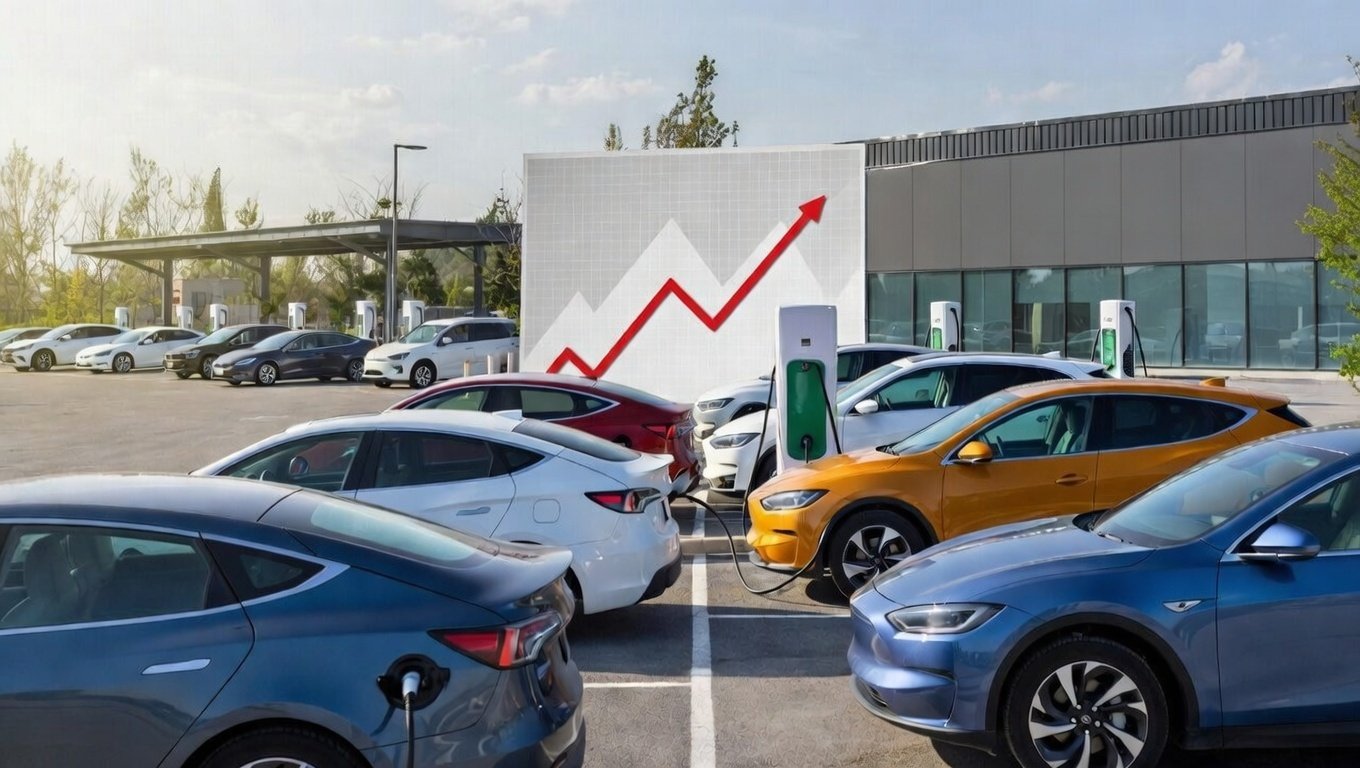
As India enters the second quarter of 2026, the electric vehicle (EV) sector is firing on all cylinders. January 2026 saw electric passenger vehicle registrations climb to approximately 18,000–18,500 units, marking a robust 51–55% year-on-year surge from January 2025's ~11,900 units. This strong start follows a full-year 2025 performance where passenger EV sales nearly doubled to around 176,000–210,000 units, pushing penetration from roughly 2.5% to 4–5% of total passenger vehicle sales.
The momentum is unmistakable: Tata Motors continues to dominate with 43–44% market share, delivering over 7,800–8,000 units in January alone; its highest monthly tally ever. The refreshed Punch.ev, now offering enhanced range (up to 350 km claimed), faster DC charging (20–80% in 26 minutes), and a lifetime battery warranty, is poised to drive 30–50% incremental volumes in the sub-₹12 lakh segment that still accounts for ~65% of overall car sales but only ~1.6% EV penetration.
Close behind, JSW MG Motor India holds second place with ~25% share, buoyed by the Windsor EV's consistent demand. Mahindra & Mahindra has emerged as the breakout story, leaping to nearly 20% market share with 3,500–3,600 units in January, a staggering 386–396% YoY jump. Its “Born Electric” lineup- XEV 9e, BE 6, and the new XEV 9S 7-seater has resonated strongly with family buyers seeking SUVs and premium features.
New entrants are reshaping the leaderboard. Vietnamese player VinFast has firmly secured fourth position (ahead of Hyundai and Kia in recent months) with models like VF 6 and VF 7 gaining traction through aggressive local assembly and pricing. Chinese giant BYD maintains a steady presence in the premium segment with the Seal, Atto 3, eMax 7, and Sealion 7, while global names like Tesla and Toyota are ramping up with initial deliveries and the upcoming e-Vitara (a Suzuki-Toyota collaboration).
This sales acceleration is powered by three interlocking forces.
First, the model pipeline has widened dramatically. 2025–2026 has seen ~30 new or refreshed EVs hit showrooms nearly double the previous year's launches. Automakers have shifted focus to popular SUV and crossover formats with longer ranges (350–500+ km in many cases), faster charging, and features like ADAS, panoramic sunroofs, and connected tech. Sharper pricing; thanks to localisation, battery cost reductions, and strategic discounts has brought more models into the ₹10–25 lakh sweet spot, where mainstream buyers live.
Second, charging infrastructure is no longer the bottleneck it once was. Public charging points have crossed 27,000–30,000 nationwide by early 2026, with significant additions along highways and in Tier-1/2 cities. Government schemes-PM E-DRIVE (extended to 2028 with ₹2,000 crore earmarked for charging) and FAME-II remnants continue to subsidise station deployment. Private players and DISCOMs are rolling out faster chargers, night-time tariffs, and interoperable networks, steadily eroding range anxiety.
Third, policy tailwinds remain strong despite the impending subsidy cliff. While demand incentives for two- and three-wheelers phase out by March 31, 2026, support for four-wheelers, buses, trucks, and charging infrastructure persists under PM E-DRIVE and PLI schemes. State-level rebates, reduced road taxes, and lower electricity tariffs for charging further sweeten the ownership equation.
The numbers tell a compelling story: EV penetration in passenger vehicles now hovers at 3.6–5%, with SUVs and premium models driving disproportionate growth. Industry forecasts point to 7% penetration by end-2026 and double-digit figures by 2030, assuming continued localisation and infrastructure scaling.
For India's 22–55 demographic, urban professionals, family buyers, and fleet operators, the EV proposition is maturing rapidly: lower running costs (₹1–2/km vs ₹8–12/km for petrol), quieter rides, instant torque, and modern tech, all at increasingly competitive price points.
Yet challenges linger. Supply-chain dependencies, battery raw-material volatility, and the need for deeper penetration in the sub-₹10 lakh segment remain hurdles. The March 2026 subsidy deadline for smaller vehicles could cause short-term price pressure, though four-wheeler incentives are safer for now.
Still, 2026 feels like the inflection point. With Tata, Mahindra, MG, and emerging players flooding the market with compelling options, charging networks expanding, and policy support holding firm, India's electric mobility story is accelerating from early-adopter niche to mainstream reality. The road ahead is electric, and it's gaining speed fast.