IMF July World Economic Outlook Projects Global Growth at 3 Percent
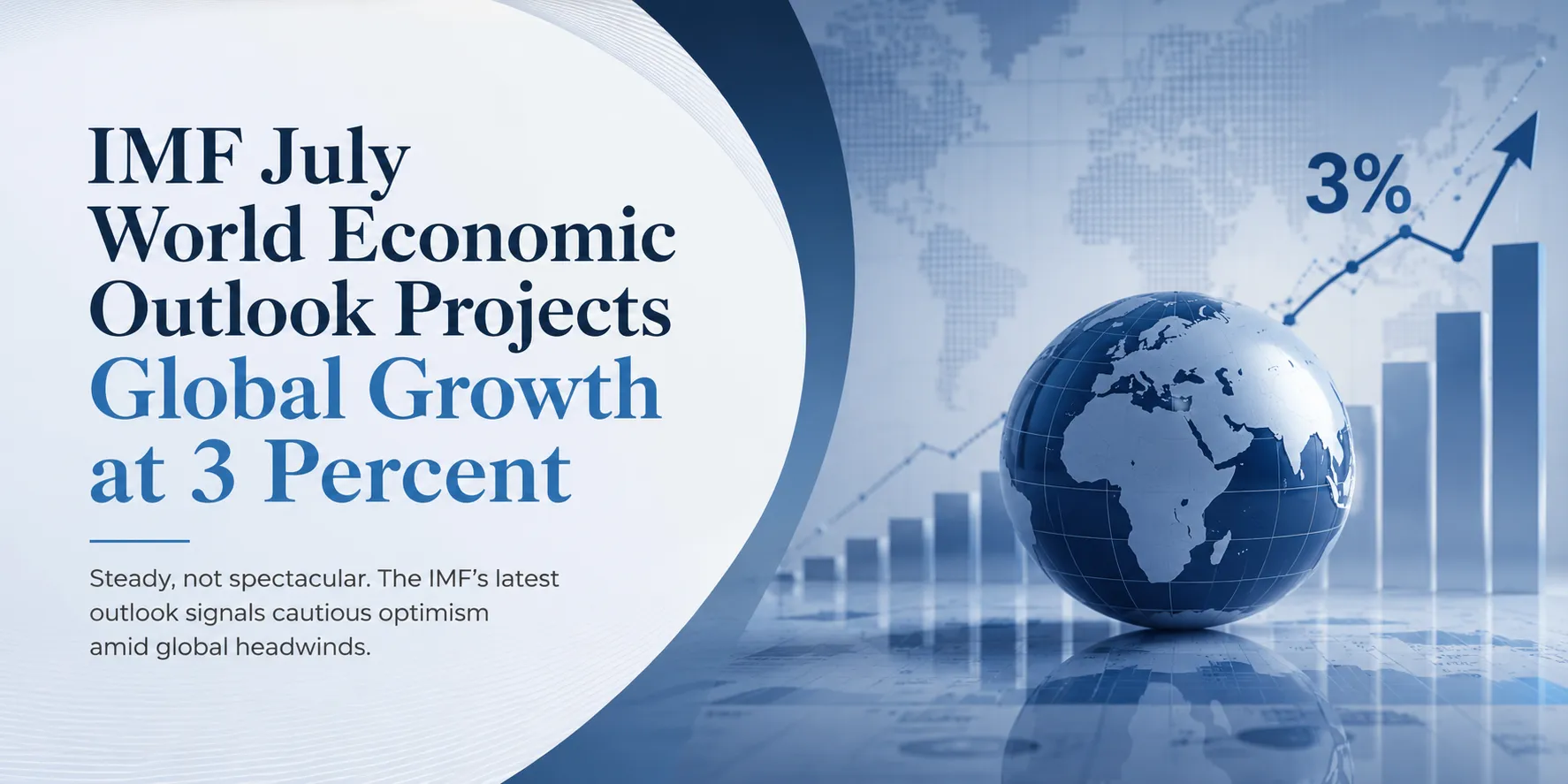
The International Monetary Fund released its July 2026 World Economic Outlook Update on the eighth of the month with a measured assessment of the world economy. Global growth is projected at three percent for 2026 and three point four percent for 2027. These figures remain broadly unchanged on a cumulative basis from the April forecasts even as the Fund slightly lowered its 2026 estimate from the earlier three point one percent reading.
Two powerful and opposing forces dominate the latest outlook. On one side stands a negative supply shock linked to the ongoing conflict in the Middle East. Higher energy costs and disruptions to shipping routes have weighed particularly on energy importing countries and more vulnerable economies. On the other side a strong positive impulse is coming from the global technology cycle. Rapid advances in artificial intelligence and the surge in related investment and demand are lifting growth in economies deeply integrated into technology value chains.
The result is an uneven recovery. Countries that benefit from artificial intelligence related activity and those that export energy have seen relative upgrades in their prospects. Commodity importers without strong positions in the technology sector face more pressure. World trade volume growth is expected to slow sharply to three point five percent in 2026 after a stronger performance the previous year before recovering somewhat in 2027. The Fund attributes this pattern in part to earlier front loading of trade ahead of tariffs as well as the gradual adjustment of supply chains and the continued expansion of technology related flows.
Inflation presents a less encouraging picture. Global disinflation has stalled. Headline inflation is now projected to rise to four point seven percent in 2026 before easing to three point nine percent in 2027. The upward revision reflects the lingering effects of the energy shock and other cost pressures. The Fund notes that risks appear more balanced than they did in April yet downside risks from any intensification of conflict or from financial market repricing remain present.
Overall the July update portrays a global economy navigating crosscurrents. The drag from geopolitical tensions in the Middle East is being partially offset by the momentum of artificial intelligence driven investment and demand. Growth holds up near recent averages but the distribution of that growth across countries and sectors remains highly uneven. Policymakers face the dual challenge of managing energy related volatility while supporting the productive potential of new technologies. The International Monetary Fund will continue to monitor these dynamics as the year progresses.