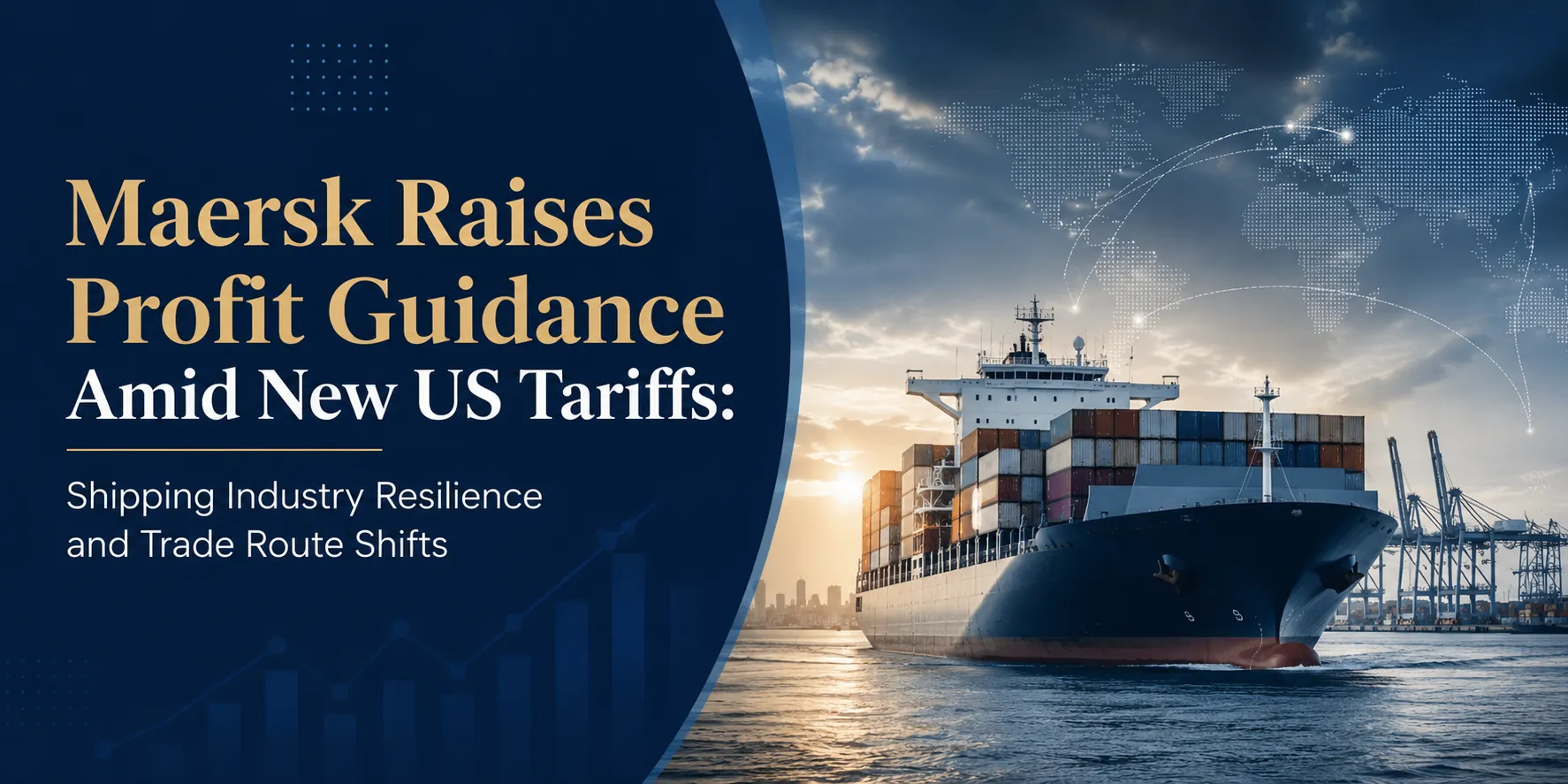
Maersk Raises Profit Guidance Amid New US Tariffs: Shipping Industry Resilience and Trade Route Shifts
In the high-stakes world of global trade, where one policy tweak can ripple across oceans, Danish shipping giant A.P. Moller-Maersk has delivered a bullish surprise. In late June 2026, the company raised its full-year profit guidance, citing stronger-than-expected container demand fueled by new US tariffs. This move highlights the shipping industry's remarkable resilience amid geopolitical headwinds and offers key signals for businesses worldwide, including those in India.
Tariffs Trigger a Demand Surge
The latest US tariffs under the ongoing America First trade framework have prompted American importers to front-load shipments, stocking up on goods ahead of potential cost hikes. This "pull-forward" effect has boosted container volumes on key routes, more than offsetting any dip in direct US-bound traffic. Maersk now projects underlying EBITDA for 2026 in the range of $8-10 billion, a sharp upgrade from prior forecasts, with EBIT also turning more positive.
Industry watchers note that while US imports may moderate, demand into Europe and other non-US markets has surged as supply chains reroute to avoid tariff exposure. Spot freight rates on transpacific and Asia-Europe lanes have climbed, benefiting carriers like Maersk that operate extensive networks.
"Tariffs are creating short-term volatility, but they are also accelerating diversification," a senior Maersk executive remarked in recent briefings. American companies are rushing to build inventory, while global players adjust sourcing strategies—trends that play directly into the hands of efficient operators.
Resilience in a Volatile Ocean
Maersk’s upgrade comes against a backdrop of broader challenges: lingering effects from the US-Iran tensions on energy costs, Red Sea disruptions (though some routes are stabilizing), and inflationary pressures. Yet the company’s performance underscores the sector’s adaptability.
- Route Shifts: With tariffs disrupting traditional flows, more cargo is moving via alternative hubs. Indian ports, for instance, stand to gain as intermediaries in rerouted Asia-Europe or Asia-US via Middle East/Indian Ocean lanes.
- Peak Season Compression: June 2026 saw elevated volumes, signaling an early peak season driven by tariff uncertainty and seasonal inventory builds.
- Tech and Efficiency Edge: Maersk continues investing in digital tools and fleet optimization, helping it capture value even as smaller players face margin squeezes.
For comparison, peers are watching closely. The resilience echoes patterns seen in previous tariff cycles, where initial disruptions eventually create new equilibria favoring agile logistics giants.
What This Means for Indian Businesses
India, with its booming export sector in textiles, pharmaceuticals, electronics, and auto components, sits at a strategic crossroads. Here’s how the Maersk update and tariff dynamics could play out:
- Export Opportunities: As US importers diversify away from heavy tariff exposure on certain origins, Indian suppliers could see increased orders. Sectors with strong USMCA-adjacent or bilateral advantages may benefit.
- Freight Cost Management: Rising spot rates demand smarter planning. Indian exporters should lock in contracts early or explore Maersk’s (and competitors’) flexible routing options via Indian hubs like JNPT or Mundra.
- Supply Chain Reconfiguration: Many global firms are “China+1” or “+India” strategies. Tariff-driven rerouting accelerates this, positioning India as a manufacturing and logistics sweet spot.
- Risks to Watch: Higher fuel surcharges from any residual Middle East volatility and potential retaliatory measures could offset gains. Indian businesses must build buffers and monitor WTO/EU developments.
Pro Tip for Indian SMEs: Leverage platforms like PBN’s business listing directory to connect with global logistics partners and explore new B2B markets amid these shifts.
Broader Global Picture
This isn’t just a Maersk story, it reflects a shipping industry proving tougher than expected. Despite trade policy noise, container demand remains solid, powered by e-commerce, nearshoring trends, and AI-driven supply chain efficiencies. However, analysts caution that the second half of 2026 could see normalization if tariffs stabilize and inventories adjust.
The episode also spotlights the interplay between geopolitics and commerce. US tariffs aim to protect domestic industry but often spur creative global adaptations, exactly what savvy players like Maersk are capitalizing on.
As Prime Business Navigator continues tracking these developments, one thing is clear: in international business, agility wins. For Indian companies eyeing global growth, the current tariff wave isn’t just a challenge, it’s a catalyst to rethink routes, partners, and positioning.