NEP 2020: Skill-Based Learning Reshaping Higher Education – The 2026 Reality Check
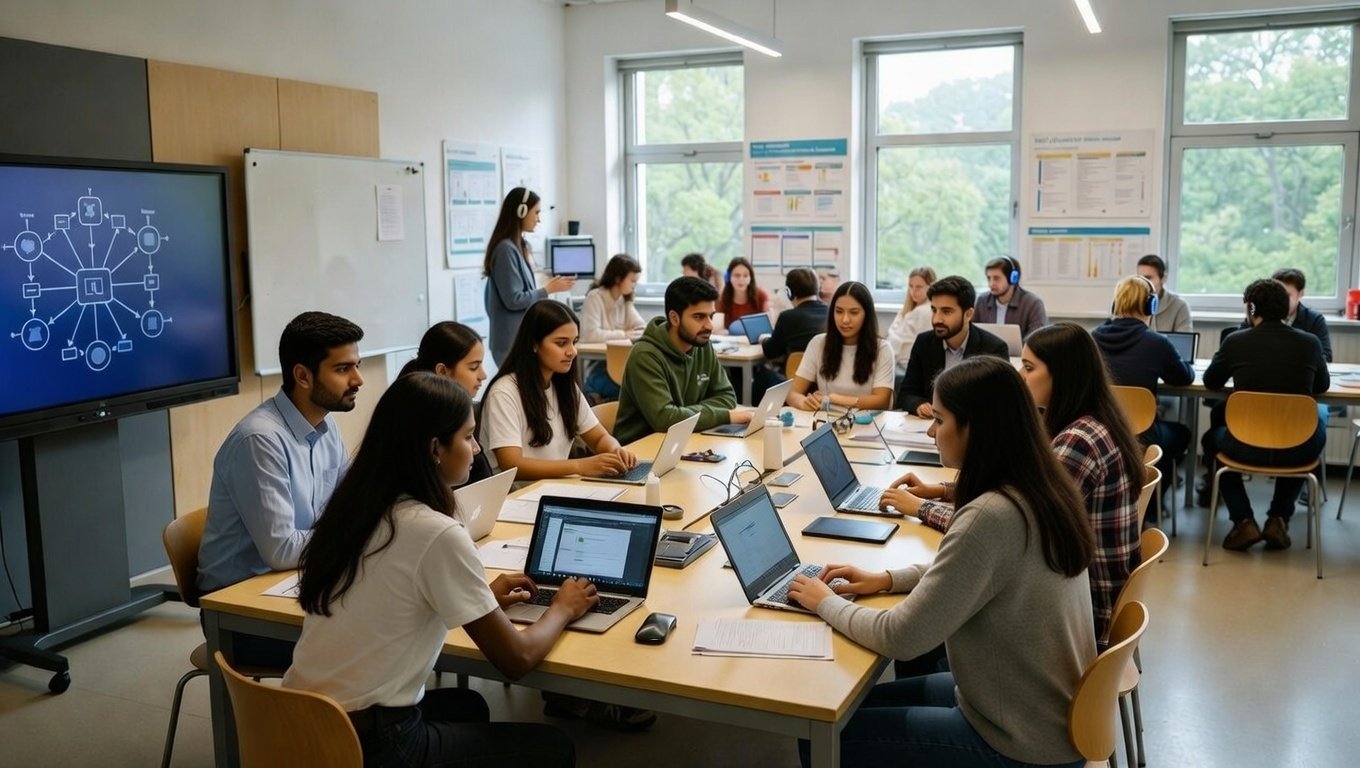
In the winter of 2025–26, walk into the campus of an average state university in Uttar Pradesh or Karnataka and the change is palpable. Gone are the days when a three-year B.A. degree meant memorising 400-page textbooks and regurgitating them in three-hour exams. Today, the same students are building small AI chatbots, running market-viability studies for local startups, or simulating quantum circuits on laptops- activities that would have been unimaginable in the pre-NEP era. Five years after the National Education Policy 2020 was notified, the most ambitious higher-education reform in independent India is no longer a policy document gathering dust; it is slowly, unevenly, but unmistakably reshaping classrooms, curricula, and career trajectories.
The cornerstone of NEP 2020 in higher education is the decisive shift from rote memorisation to skill-based, outcome-oriented learning. By 2026, over 60% of central and state universities have adopted the four-year undergraduate programme (FYUP) framework in at least some disciplines. The structure- three years for a standard degree + one honours/research year allows multiple exit points (certificate after one year, diploma after two, degree after three, honours/research degree after four) and encourages multidisciplinary combinations that were previously impossible. A commerce student can now minor in data analytics; a physics major can take electives in entrepreneurship or climate finance. The Academic Bank of Credits (ABC), now linked to DigiLocker and operational across 1,200+ institutions, lets students transfer credits seamlessly between universities, making mobility real rather than rhetorical.
Nowhere is the skills-first philosophy more visible than in emerging technology domains. In 2025–26, quantum computing appeared in undergraduate syllabi at IIT Delhi, IISc Bengaluru, and several private universities including Amity and VIT. Students in their third year are running basic quantum algorithms on IBM Qiskit and Google Cirq simulators, exposure that would have been reserved for PhD candidates a decade ago. Similarly, AI/ML, cybersecurity, blockchain, and sustainable engineering are no longer postgraduate specialisations; they form core or elective components in B.Tech, B.Sc, and even B.Com programmes. The University Grants Commission’s 2024–25 guidelines explicitly mandate that at least 40% of total credits in any programme must come from skill-development courses, internships, apprenticeships, or project work. Industry feedback has been unusually positive: NASSCOM’s 2026 employability report notes that graduates from NEP-aligned institutions show 18–22% higher “job-ready” scores in technical and soft skills compared with the 2020 cohort.
The Gross Enrolment Ratio (GER) target of 50% by 2035 remains the north star. In 2025–26, national GER stands at approximately 29.5–30%, up from 27.3% in 2019–20. The jump is driven by three forces: expanded capacity through new private universities and deemed-to-be universities, aggressive outreach in aspirational districts, and the proliferation of online and ODL programmes under UGC’s Open and Distance Learning regulations. SWAYAM and NPTEL now offer over 3,200 courses with credit transfer, while institutions such as IGNOU, Ambedkar Open University, and newer players like upGrad and Coursera-for-Campus have enrolled millions. For the 22–35 age group, this means second-chance education is no longer a pipe dream; a working professional in Bengaluru or Pune can earn a full degree without quitting their job.
Yet the picture is far from perfect. The single biggest bottleneck remains teacher training and mindset change. A 2025 UGC survey of 1,800 faculty members across 12 states revealed that only 38% felt “confident” delivering project-based or interdisciplinary courses. Many professors trained in the old system struggle to design outcome-based assessments, move away from annual exams, or integrate industry projects. The National Initiative for Proficiency in Reading with Understanding and Numeracy (NIPUN) and Malaviya Mission Teacher Training Programme have trained over 1.2 million faculty since 2021, but the scale is still inadequate for a 45-million-student higher-education system. Infrastructure gaps—especially in rural and semi-urban colleges—persist: only about 45% of institutions have functional high-speed internet and smart classrooms, per the AISHE 2024–25 report.
For students, the transition brings both opportunity and anxiety. Adaptive learning platforms (BYJU’S, PhysicsWallah, upGrad, Unacademy Campus) now integrate with university LMS systems, offering personalised pathways and real-time feedback. A final-year student in Jaipur told Prime Business Navigator: “Earlier I studied to pass exams. Now I study to solve problems—and the placement cell actually asks about my GitHub projects.” Placement data from top-tier institutions shows average salaries rising 12–15% year-on-year for skill-aligned programmes. Yet in Tier-2 and Tier-3 colleges, where faculty shortages and outdated labs are acute, many students still feel caught between two worlds: expected to be “industry-ready” but not adequately equipped.
As a seasoned editor who has tracked education reforms since the Yash Pal Committee days, I see NEP 2020 as India’s most serious attempt yet to align higher education with the demands of a $5-trillion-plus economy that will be dominated by technology, services, and green industries. The policy’s success in the next five years will hinge on three priorities: massive, outcome-linked investment in faculty development; accelerated digitisation of assessment and credentialing; and genuine public-private collaboration to scale apprenticeships and live projects.
For the 22–55 readership of Prime Business Navigator—whether you are a corporate hiring manager scanning for talent, a parent evaluating college options, or a policymaker shaping budgets—the message is clear. Skill-based higher education is no longer a slogan; it is the new baseline. The institutions and students who embrace it fastest will define India’s next decade of competitiveness. Those who cling to the old playbook risk being left behind.
The clock is ticking. By 2030, half of India’s college-going population must be equipped not just with degrees, but with the ability to learn, unlearn, and relearn continuously. NEP 2020 has laid the tracks. Whether the train gathers full speed depends on execution—and on whether we treat higher education as a national economic imperative rather than an administrative afterthought.