PhysicsWallah – The Edtech Unicorn That Proved Affordable Can Also Be Profitable
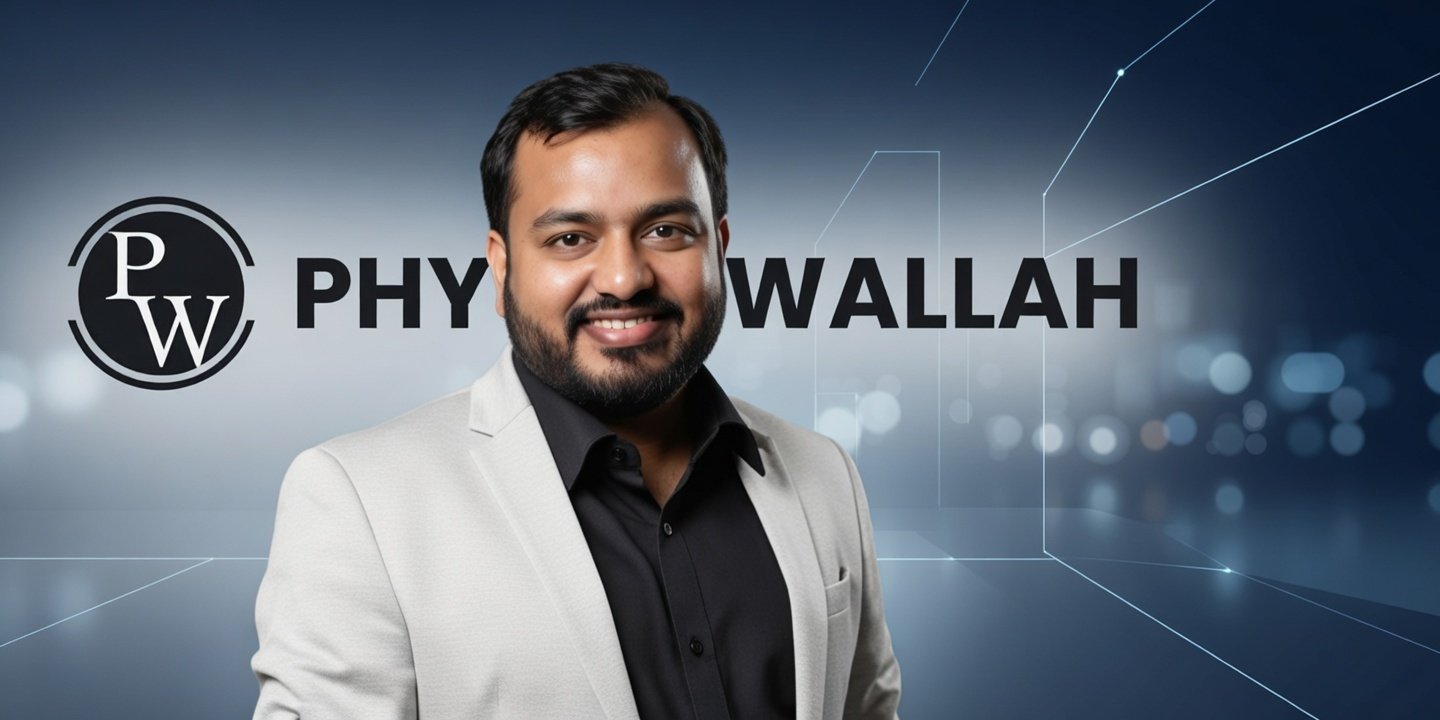
In a sector still licking wounds from the post-pandemic funding winter, one Indian edtech story continues to stand apart. PhysicsWallah (PW), the brainchild of former YouTube physics teacher Alakh Pandey, has quietly crossed the $3.7 billion valuation mark while most peers are still burning cash to stay alive. As of February 2026, the company reports over 20 million registered learners, a hybrid footprint of 100+ offline centers, and most remarkably positive EBITDA in several key quarters. For an industry that once chased unicorn status at any cost, PW’s trajectory offers a rare masterclass in disciplined scaling.
Alakh Pandey started PhysicsWallah in 2016 with nothing more than a smartphone, a whiteboard, and a YouTube channel. His unpolished, Hindi-medium physics lectures quickly went viral among JEE and NEET aspirants who could not afford ₹1.5–2 lakh coaching fees in Kota or Delhi. By 2020 the channel had crossed 10 million subscribers; by 2021 Pandey had incorporated the company and raised $210 million at a $1.1 billion valuation from GSV Ventures, WestBridge Capital, and GIC. The pandemic tailwind was strong, but unlike many contemporaries, PW never lost sight of unit economics.
The pivot to hybrid learning proved decisive. While pure-play online platforms struggled with retention and monetization after classrooms reopened, PhysicsWallah doubled down on offline presence. As of early 2026 the company operates over 100 Vidyapeeth centers across 60+ cities, offering both live online classes and physical classrooms under one roof. Students can switch between formats mid-course, attend doubt-clearing sessions in person, and access recorded lectures 24/7. The model keeps annual fees between ₹25,000–65,000 depending on the batch and course; roughly one-third the price of traditional Kota giants, yet delivers comparable (and in many cases superior) results.
Financial discipline has been the quiet differentiator. While the broader edtech sector saw valuations contract 60–80% and funding dry up after 2022, PW stayed profitable at the operating level in FY24 and FY25. Management attributes this to high contribution margins from offline centers (lower customer-acquisition cost, better LTV:CAC ratios) and aggressive control over content production costs. The company produces most of its video content in-house with a lean team of educators-turned-content creators rather than outsourcing to expensive studios. Live classes are delivered by the same teachers who create recorded material, eliminating duplication.
The numbers tell a compelling story. In the latest reported quarter (Q3 FY26), PW clocked annualized revenue run-rate of approximately ₹2,200–2,400 crore with gross margins in the high 60s. Offline centers now contribute nearly 45% of revenue, a sharp reversal from the pure-digital days and show significantly higher repeat rates and average ticket sizes. The company has also expanded beyond JEE/NEET into foundation courses (classes 6–10), state-board preparation, UPSC, and skill-based short courses, diversifying revenue streams without diluting focus on affordability.
For the 22–35 age group, parents of today’s aspirants and young professionals looking to upskill, PW represents something larger than exam coaching. It has become a symbol of what happens when deep domain expertise meets ruthless focus on price-to-value. Alakh Pandey, still only 34, remains the face of the brand: he continues to teach select batches, appears in every major marketing campaign, and maintains an active presence on social media. That authenticity resonates in Tier-2 and Tier-3 cities where trust in faceless edtech platforms remains low.
Challenges remain. Offline expansion is capital-intensive, real-estate leases, faculty salaries, and infrastructure upkeep eat into margins. Regulatory uncertainty around coaching-center guidelines could force compliance costs. And competition is intensifying: Allen, Aakash, and FIITJEE are rapidly digitizing, while newer players like Allen Digital and Unacademy’s offline push are crowding the hybrid space. Yet PW’s first-mover advantage in affordable hybrid, combined with a fiercely loyal student and parent base, gives it a formidable moat.
As India’s education market evolves toward outcomes over hype, PhysicsWallah’s story is instructive. It proves that democratizing quality learning does not require endless venture capital; it requires obsessive focus on the student wallet and relentless execution. In a sector searching for sustainable models, PW is no longer the underdog; it is the benchmark.
For founders watching from the sidelines and investors hunting the next resilient bet, the message is clear: affordability, hybrid delivery, and profitability can coexist. PhysicsWallah did not just survive the edtech winter; it emerged stronger, more profitable, and more relevant than ever.