Tamil Nadu Politics Under CM Vijay (Thalapathy Vijay): Early Reforms and Their Impact on Jobs, Education, and Business
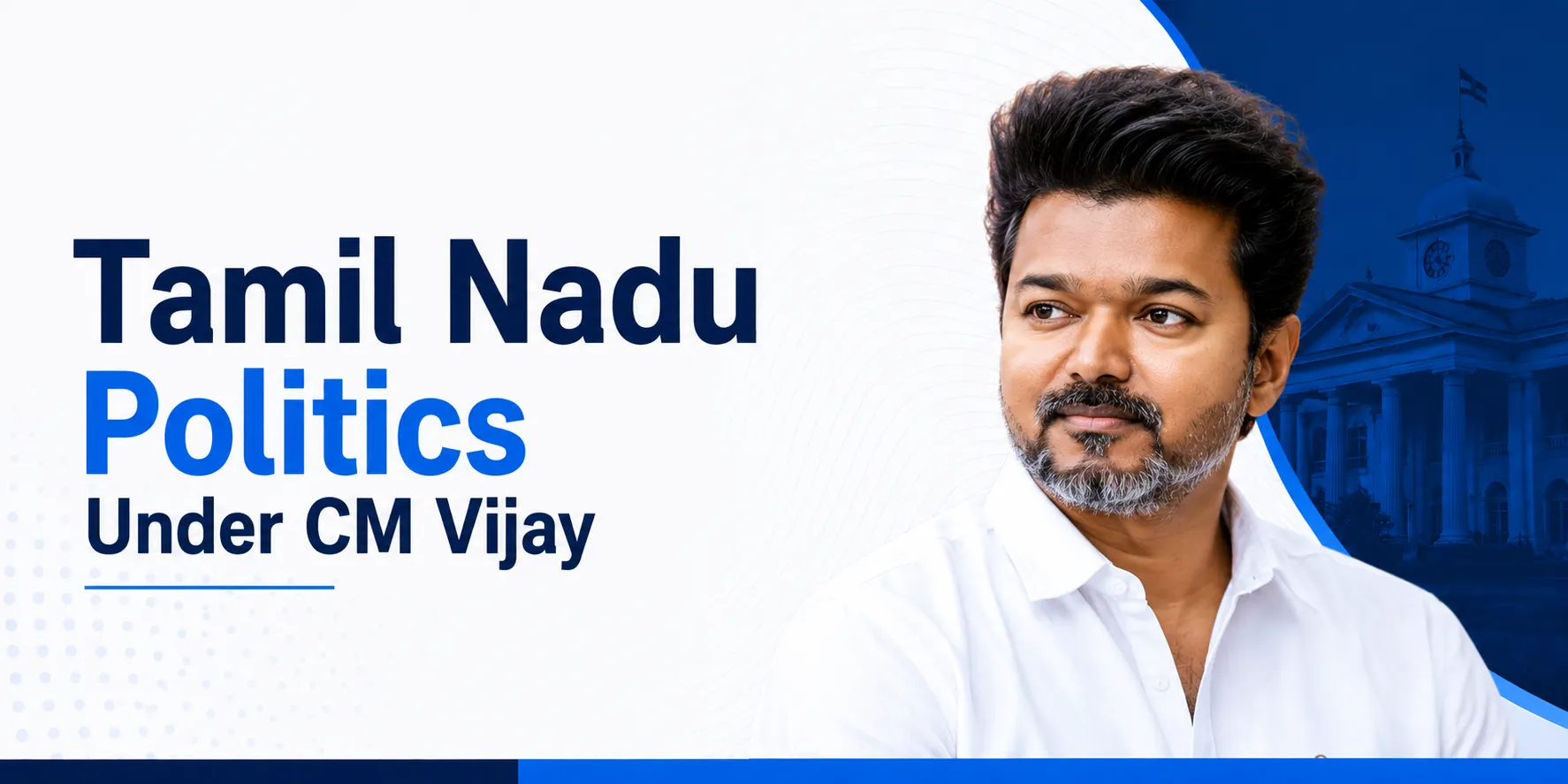
In one of the most dramatic political shifts in recent Indian history, Tamil cinema superstar C. Joseph Vijay, popularly known as Thalapathy Vijay, was sworn in as Chief Minister of Tamil Nadu on May 10, 2026. His party, Tamilaga Vettri Kazhagam (TVK), emerged as the single-largest party with 108 seats in the 234-member Assembly, ending the decades-long Dravidian duopoly of DMK and AIADMK. With support from Congress and other allies, Vijay’s government passed a floor test comfortably and has moved swiftly on governance.
For a business magazine like PBN, the key question is: Can this celebrity-led administration deliver sustainable economic growth, job creation, and education reforms while balancing its strong welfare agenda?
Early Days: Welfare-First Approach with Reform Signals
In his first week, CM Vijay signed several high-visibility orders:
- Free bus travel for women and 200 units of free electricity.
- Closure/revamp of hundreds of TASMAC liquor shops near schools and residential areas.
- Formation of anti-drug task forces and a dedicated women’s safety force.
- Dearness Allowance (DA) hike to 60% for government employees, teachers, and pensioners.
These moves echo the welfare populism Tamil Nadu is known for, but analysts note a subtle difference — Vijay’s team is projecting efficiency, anti-corruption, and youth-centric governance.
Impact on Jobs & Employment
Positive Signals for Youth:
- Vijay has announced free training programmes for educated unemployed youth preparing for competitive exams and jobs.
- Emphasis on skill development, with hints of an AI & Technology-focused ministry.
- Long-term vision includes positioning Tamil Nadu as a $1.5 trillion economy by 2036, with strong focus on manufacturing, electronics, and exports.
Challenges for Industry:
- Closure of TASMAC outlets has sparked debate on revenue loss (TASMAC contributed over ₹48,000 crore annually). This could pressure the fiscal balance if not offset by other measures.
- Investors (especially in auto, electronics, and FDI-heavy sectors) are in “wait-and-watch” mode regarding labour reforms and policy continuity. Foreign companies from Japan, South Korea, and Taiwan want assurance on industrial incentives and ease of doing business.
Business Outlook: Early indications suggest the government may priorities large-scale employment generation through infrastructure and manufacturing incentives. However, heavy welfare spending (projected at nearly ₹1 lakh crore annually) could strain finances unless accompanied by revenue-enhancing reforms and industrial growth.
Education: A Potential Game-Changer
Tamil Nadu has historically resisted certain central schemes like NEET and NEP. Under the new regime:
- Indications of a softer stance on NEET and greater flexibility in admissions policies.
- Focus on improving school education quality, skill-based learning, and reducing commercialization of education (a recurring theme in Vijay’s films).
- Potential push for better higher education access, including fee support for underprivileged students.
For the business community, a reformed education system aligned with industry needs could significantly boost employability and attract more investment in knowledge sectors like IT, semiconductors, and biotechnology.
Other Key Reforms & Governance Style
- Anti-Corruption & Transparency: Vijay’s clean image and film-driven “people’s leader” persona are being leveraged to rebuild public trust in administration.
- Women & Social Welfare: Strong emphasis on women’s safety and mobility.
- Tamil Pride & Development: Balancing regional identity with pragmatic economic policies.
- Cabinet Mix: A blend of experienced politicians and younger faces, including education and health portfolios assigned to reform-minded leaders.
Business Implications: Risks and Opportunities
Opportunities:
- Fresh governance could accelerate infrastructure projects, logistics improvements, and ease of doing business.
- Youth-centric policies may create a more skilled workforce.
- Political stability (post floor test) reduces uncertainty for investors.
Risks:
- High welfare expenditure vs. industrial incentives is a delicate balancing act.
- Potential labor unrest if worker expectations rise sharply.
- Revenue gaps from liquor policy changes need quick alternatives (e.g., tourism, manufacturing, or green energy push).
Markets are cautiously optimistic. Policy clarity on industrial incentives, power tariffs, and land acquisition in the coming months will be critical for Tamil Nadu to maintain its position as a top investment destination in South India.
The Road Ahead
Thalapathy Vijay’s transition from reel hero to real Chief Minister is historic. His government’s success will ultimately be judged not by initial popularity, but by its ability to deliver jobs, quality education, and inclusive growth while maintaining fiscal discipline.
For businesses operating in or eyeing Tamil Nadu, the next 6–12 months will be decisive. PBN will continue tracking key policy announcements, budget priorities, and ground-level impact.