Trump 2.0 Deal-Making Era – Opportunities & Headwinds for Indian Exporters in 2026
person
By PBN
•
March 22, 2026
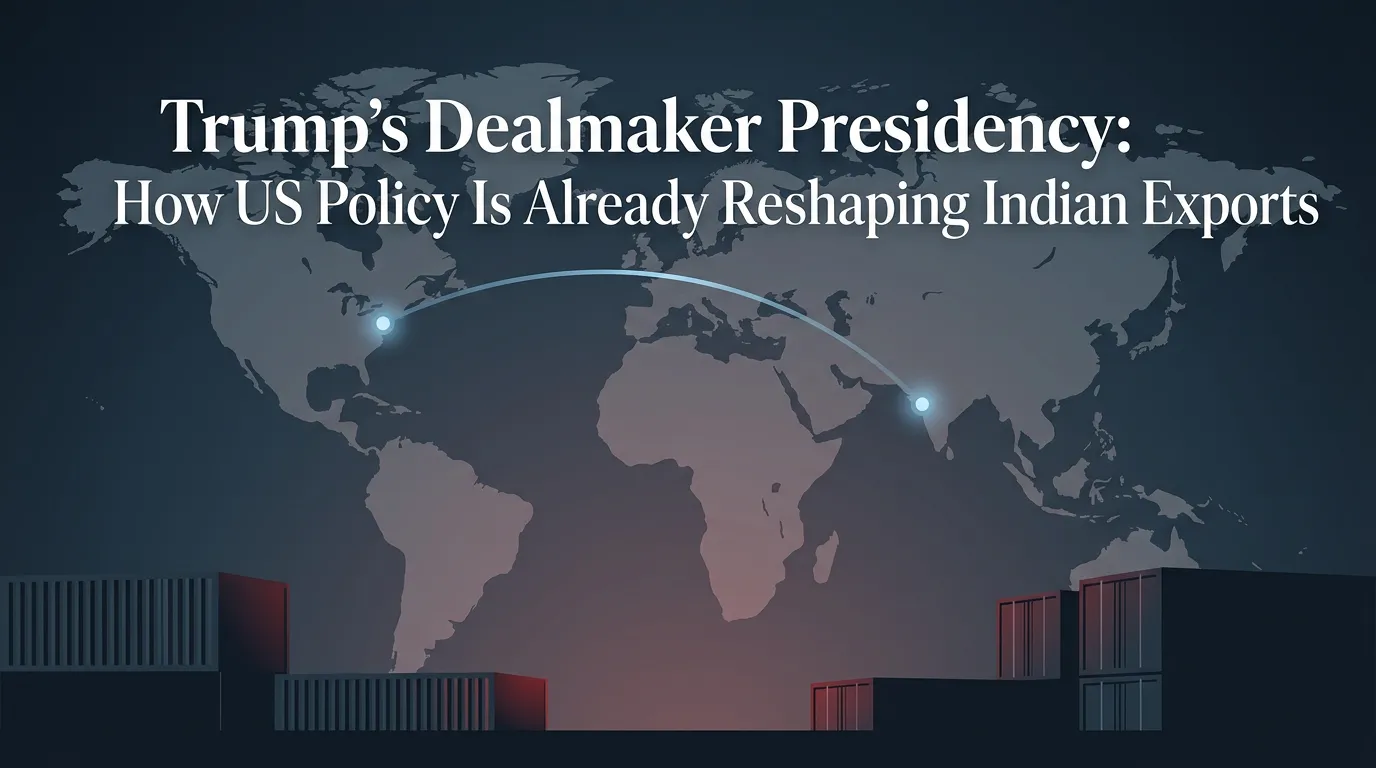
Donald Trump’s second term began with a bang: 25% tariffs on Chinese imports announced within first 72 hours, immediate review of USMCA, and public threats of 10–20% universal tariffs unless trading partners “play fair”.
For Indian exporters; $78 billion of goods went to the US in FY25, the landscape just changed dramatically.
Opportunity Side
- China+1 sourcing wave accelerates US importers are already shifting 18–26% of orders from China to India (textiles, electronics components, pharma formulations, auto parts). Indian manufacturers with US FDA approvals or IATF certifications are seeing order books grow 45–110% in Jan–Feb 2026.
- Defence & aerospace offsets explode Trump’s “Buy American – Hire American” is being balanced with massive defence sales to allies. India is negotiating $12–18 billion in new deals (F-35 discussions, GE engine co-production, drone swarm tech). Private players will get 60–70% offsets.
- Energy & LNG re-export play US LNG terminals are at full capacity. India can import US LNG, regasify, and re-export spot cargoes to Europe/Asia at higher netbacks- a trade flow that barely existed in 2025.
Headwind Side
- Universal tariff threat Trump has repeatedly said 10–20% tariffs on all imports unless countries reduce their own tariffs to zero. India’s average applied tariff is ~13%. If enacted, it would raise landed cost of Indian textiles, gems, seafood, pharma by 10–20% overnight.
- H-1B & L-1 visa squeeze Tighter immigration rules could cut Indian IT services revenues by 8–14% if onsite headcount drops sharply.
- Currency & capital flow volatility Stronger dollar + higher US yields = FPI outflows + rupee depreciation. Already seen ₹88,000 Cr equity exit in March.
Practical Moves Indian Exporters Are Making Right Now
- Fast-tracking US warehousing & near-shoring hubs (Texas, New Jersey, California).
- Locking in multi-year contracts before tariffs potentially hit.
- Diversifying to Canada, Mexico, UK, EU under existing FTAs.
- Aggressively using PLI 2.0 & RoDTEP benefits to improve cost competitiveness.
- Trump 2.0 is simultaneously the biggest tailwind and biggest risk Indian exporters have faced in a decade.
The companies that move fastest on China+1, defence offsets and supply-chain resilience will gain market share for the next 5–7 years.
Sponsored