
Under 20 Founders and the New Reality of Building Startups
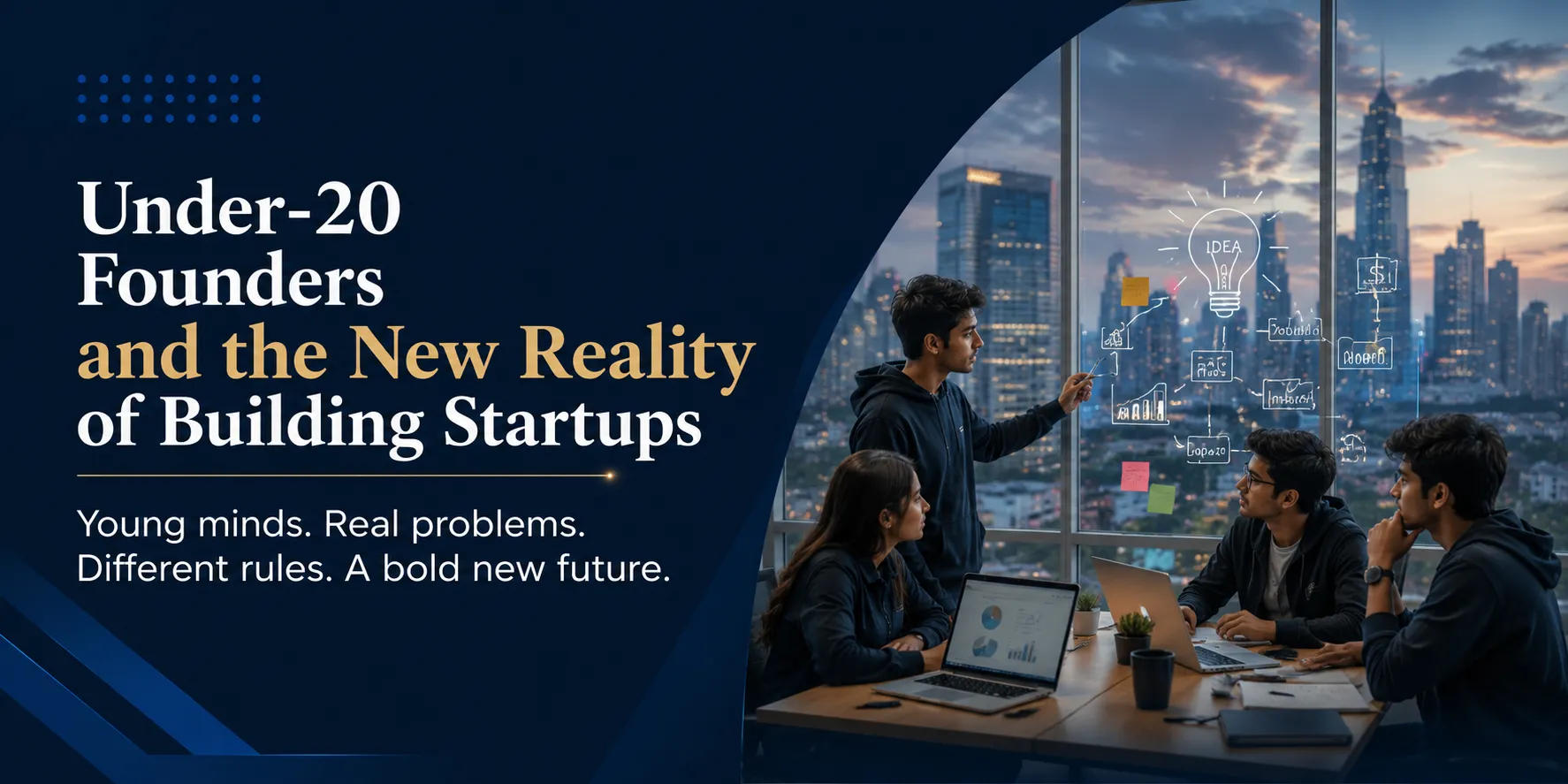
In late July 2026 a clear picture emerged of what it means to start a company before turning twenty. Investors are writing larger checks to very young founders than in previous cycles, artificial intelligence tools have lowered the technical barriers to launching, and every step of the journey now unfolds in public view. The combination has created a new operating environment that feels both more open and more unforgiving.
One of the clearest voices in this conversation belongs to Arlan Rakhmetzhanov. At nineteen the Kazakhstan born founder of Nozomio, a Y Combinator backed company building tools that help AI agents discover and use software services, has already raised more than six million dollars. His personal framing of the stakes is absolute. He describes the path as binary: either the company reaches the scale of a Google or the outcome is failure that leaves him with nothing. That intensity is not unique to him. Several founders in the same age group describe a similar win or lose mindset that leaves little room for gradual learning.
The same week brought attention to Pranjali Awasthi, also nineteen, who left high school and later Georgia Tech to build Slashy, an AI product focused on email management that drew Y Combinator support. After more than a year she moved into a new stealth project. She notes that raising capital before eighteen once prompted repeated questions about why a teenager would even attempt to build a company. After crossing that age threshold the questions eased, yet the ambient pressure only grew. Every funding announcement, product pivot, and milestone now lives on LinkedIn and X, where the audience is both supportive and relentlessly analytical.
Aidan Guo, twenty, co founder of an AI desktop assistant company that raised roughly one point six million dollars, speaks of the layered anxiety that comes with the visibility. The baseline fear of failure already exists for any founder. When that fear is compounded by real time public commentary on every decision, the emotional load becomes heavier. He has called for greater empathy toward people still learning the mechanics of company building while the entire process streams online.
Investors who back these teams see clear advantages in youth. Ashley Smith of Vermilion Cliffs has observed that many young developers learn software construction by contributing to open source projects and experimenting with the newest AI systems. Without mortgages or full time jobs demanding their attention, they often have more hours available for pure experimentation. What they lack in years of operating experience they offset with willingness to try unusual approaches and an absence of fear about looking inexperienced. A meaningful portion of her portfolio now includes founders in their twenties, including some still under twenty one.
The flip side of that enthusiasm is a market that no longer tolerates slow iteration. The expectation of rapid growth toward a single north star metric remains high even as capital arrives earlier. In the current AI heavy landscape competition often comes not from established corporations but from other young teams operating in the same narrow category. The result is a visible arms race of polished launch videos, frequent public updates, and carefully curated narratives designed to capture attention. Time spent polishing those signals can crowd out the quieter work of talking to customers and refining the product itself.
Timothy Chen of Essence Ventures has noted the shift in competitive focus. Startups once primarily watched incumbents. Now they watch their peers. The pressure to demonstrate progress quickly has intensified, and the tools that make rapid building possible also make rapid comparison inevitable.
This environment carries practical risks. Younger founders still learning standard deal structures can encounter terms that later prove difficult. The drive for speed can push teams toward inflated metrics or aggressive growth tactics before the fundamentals are solid. Yet the most consistent advice from both the founders and the investors who back them returns to enduring principles. The product that stays close to customers and continues shipping tends to win, regardless of the age of the people building it. Conviction, intellectual honesty, and genuine obsession with the user remain the durable advantages.
In India the same pattern is visible through vehicles such as Campus Fund, which deliberately seeks student and recent dropout founders working on deep technology, climate solutions, and other ambitious ideas. The global conversation in July 2026 simply made the underlying dynamics more explicit. Artificial intelligence has compressed the time required to go from idea to working prototype. Social platforms have removed the private space that earlier generations of founders once used for quiet experimentation. Capital has become more willing to back extreme youth. The combination produces a generation of under twenty founders who operate with unusual intensity under continuous observation.
The stories that surfaced in July do not suggest that building young has become easier. They show that the path has become more transparent, more accelerated, and more exposed to public judgment. For those who thrive in that setting the upside remains substantial. For everyone else the new reality of building startups before the age of twenty is defined by speed, visibility, and the constant knowledge that both success and failure will be widely discussed.