US-Iran MoU and the Reopening of the Strait of Hormuz: Implications for Global Oil Supply and Indian Energy Security
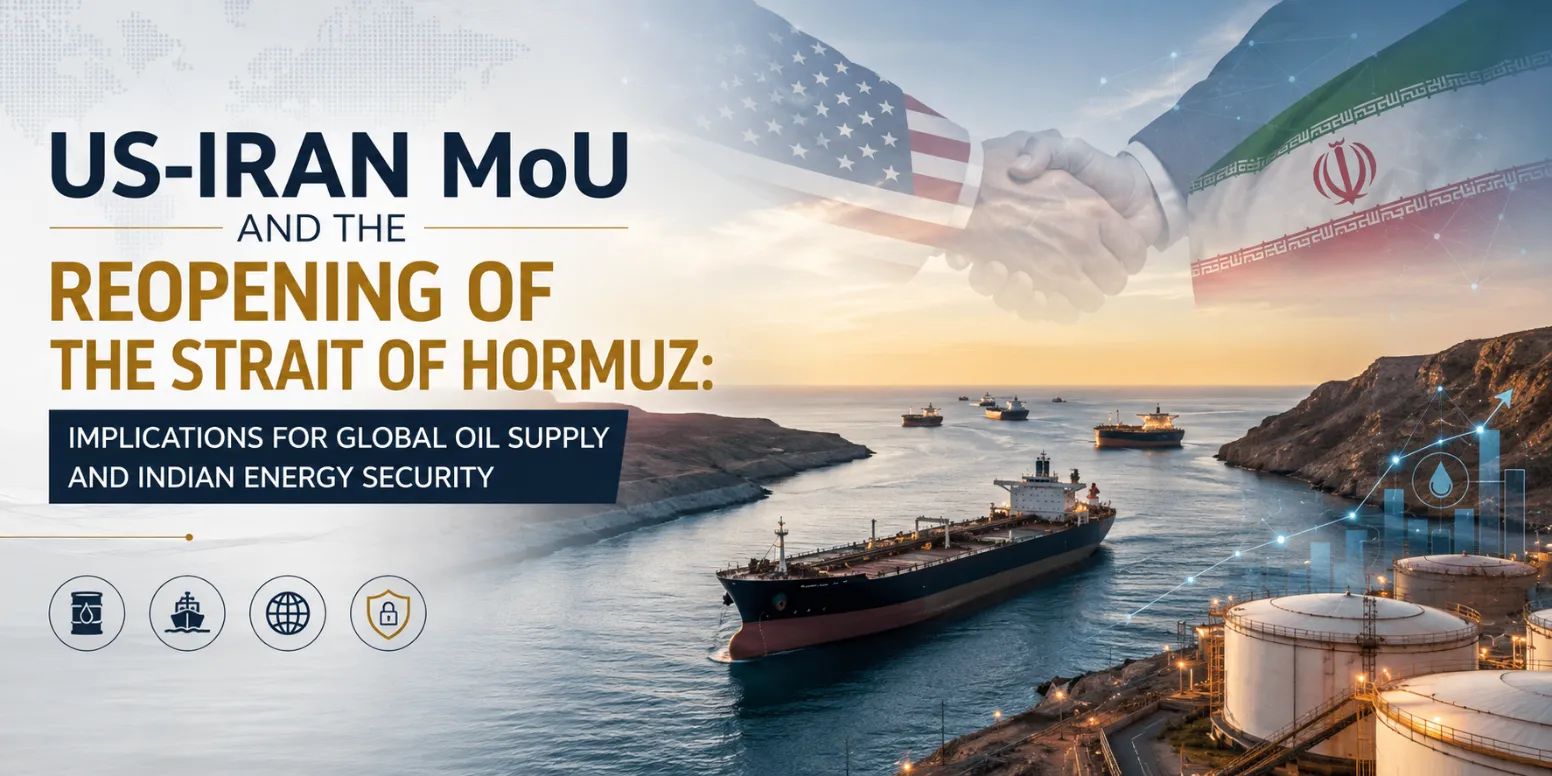
In a development that has eased months of anxiety across energy markets, the United States and Iran signed a Memorandum of Understanding (MoU) in mid-June 2026. This pact includes a temporary halt to hostilities and the reopening of the Strait of Hormuz- the narrow waterway through which nearly one-fifth of global oil and significant liquefied natural gas volumes flow.
For businesses and governments watching oil prices swing wildly since the earlier conflict, this marks a potential turning point. Brent crude, which had spiked amid disruptions, has moderated toward the $70-75 per barrel range, offering breathing room for economies grappling with inflation and input costs.
Why the Strait of Hormuz Matters
The Strait of Hormuz is the world’s most critical chokepoint for energy. Located between Iran and Oman, it handles around 20-21 million barrels of oil per day at normal capacity, roughly 20% of global seaborne crude trade. Disruptions here don’t just affect prices; they ripple through supply chains, shipping insurance premiums, and downstream industries from petrochemicals to transportation.
Earlier closures and threats of attacks had triggered one of the largest supply shocks in recent history, pushing prices higher and forcing nations to tap reserves or seek costlier alternatives. The MoU, which includes provisions for reopening the strait toll-free for at least 60 days and further talks on nuclear issues and sanctions relief, has already seen increased vessel traffic, including supertankers resuming routes.
Markets have responded with cautious optimism. While full normalization may take weeks due to insurance and logistical hurdles, the reduced geopolitical premium is helping stabilise expectations. Analysts note that a sustained reopening could return the market to surplus conditions later in 2026, potentially pressuring prices downward.
Global Oil Supply Outlook Post-MoU
The immediate impact is positive for supply reliability. With Iranian oil exports potentially ramping up under waivers and General License X allowing certain transactions, additional volumes could enter the market. Combined with steady non-OPEC+ production and possible OPEC policy adjustments, this sets the stage for better balance.
However, risks remain. Implementation of the MoU is key, and any flare-ups could quickly reverse gains. Broader forecasts from the World Bank and IMF point to global growth slowing to around 2.5-3.3% in 2026, partly due to lingering effects of energy volatility, though AI investments and adaptability provide some cushion.
For international businesses, the message is clear: diversify routes, hedge smartly, and monitor the 60-day window closely. Shipping giants like Maersk have already adjusted guidance, highlighting how tariffs and route stability interplay in profitability.
India’s Stake: Energy Security in Focus
India, one of the world’s largest crude importers, stands to gain significantly if stability holds. The country sources a substantial portion of its oil from the Middle East, making Hormuz disruptions a direct hit to the import bill, inflation, and rupee pressure.
Lower and more predictable oil prices could ease the current account deficit, provide relief to consumers at the pump, and support sectors like aviation, logistics, and manufacturing. Indian refiners already adept at processing varied crudes may see improved margins as feedstock costs moderate.
That said, long-term energy security demands more than relief from one chokepoint. Experts recommend accelerating diversification of suppliers (including the US, Russia, and Latin America), boosting strategic reserves, and pushing domestic production alongside renewables. The MoU also opens doors for potential diplomatic and commercial engagement in the region as sanctions dynamics evolve.
For Indian businesses, this is a moment to reassess exposure. Companies with heavy fuel dependencies should explore forward contracts or inventory strategies, while exporters to energy-sensitive markets can benefit from lower global costs.
The Road Ahead: Cautious Optimism
The US-Iran MoU is not a final peace deal but a pragmatic step that has already delivered market relief. Its success over the coming months will influence everything from inflation trajectories to investment flows in emerging markets.
As Prime Business Navigator continues tracking these shifts, one thing is certain: in today’s interconnected world, stability in distant waterways translates directly into opportunities and risks on Indian shores. Businesses that stay agile and informed will be best positioned to navigate the evolving energy landscape.