From Hostel Rooms to Hyperlocal Impact: Student Marketplace Ideas
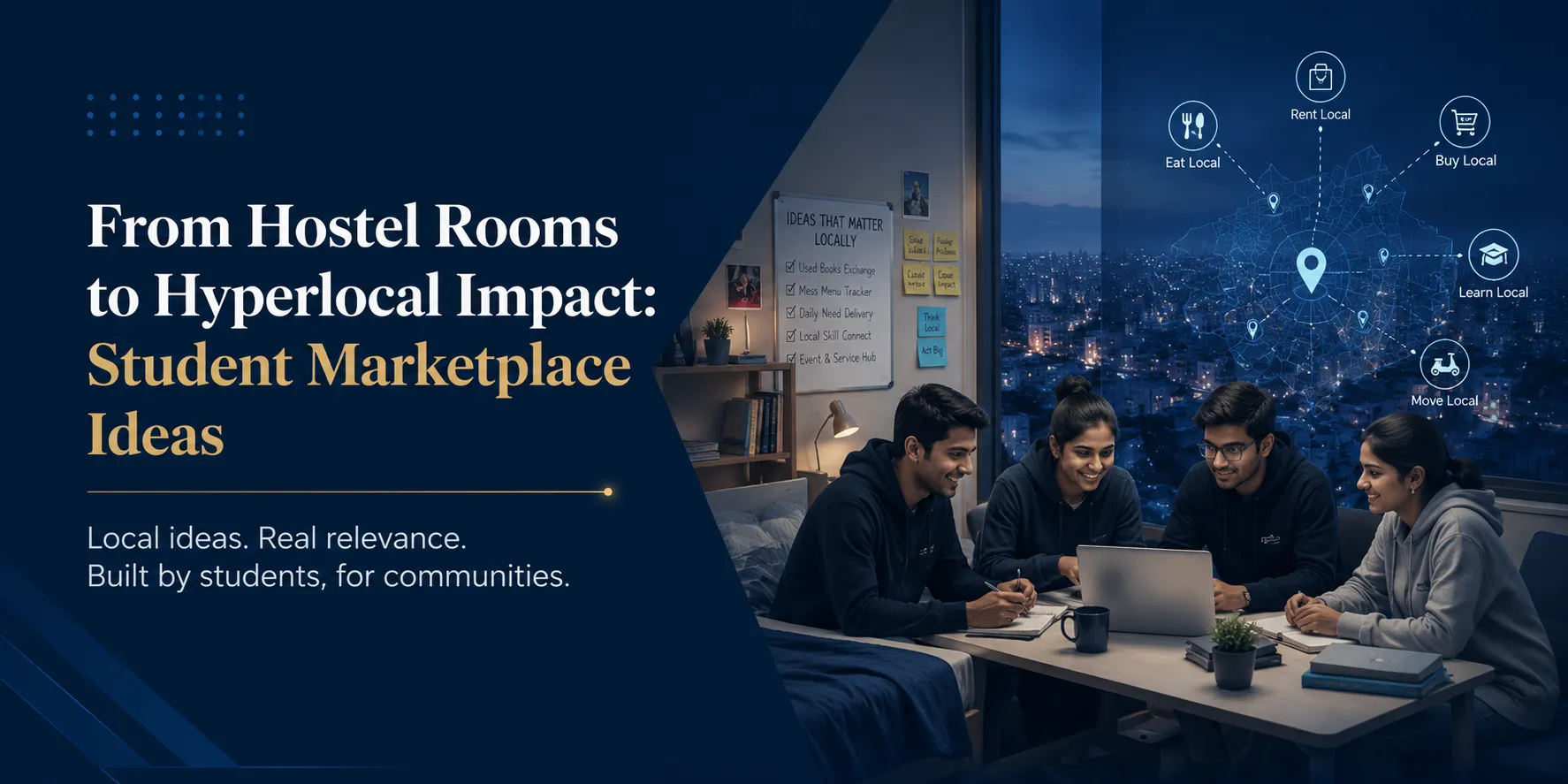
In the crowded hostels and late night discussion spaces of IIT Bombay, ideas often begin as quiet conversations among students who notice everyday problems around them. One such idea, selected in July 2026, now sits at the heart of a larger effort to turn campus thinking into real world solutions. It is a digital marketplace designed to take ceramics crafted by pottery artisans in Dharavi and place them directly in the hands of customers beyond the neighbourhood.
Groww Foundation, the philanthropic arm of Groww, announced the first cohort of its INV.ENT programme that month. The programme selected 19 innovation projects developed by 35 student innovators at the Indian Institute of Technology Bombay. Nearly 400 submissions had poured in from across disciplines. The chosen ideas ranged widely, yet the marketplace for Dharavi pottery stood out for its clear focus on connecting traditional craft with modern reach.
Dharavi has long been known for its skilled potters who shape clay into functional and decorative pieces using methods passed down through generations. Many of these artisans work within tight local networks and face limited access to wider buyers. The student team behind the marketplace saw an opportunity to build a simple digital platform that would allow these makers to list their work, reach new customers, and receive fairer returns without leaving their community workshops. The concept grew from direct observation and conversations rather than distant theory. Students living and studying in Mumbai could walk through the lanes, speak with the artisans, and understand the gaps that technology might close.
The INV.ENT programme itself provides the structure that helps such ideas move forward. It operates through two tracks. Three teams were named Grand Challenge Fellows and became eligible for milestone based annual support of up to Rs 25 lakh each. The remaining 16 teams, including those working on early stage concepts like the pottery marketplace, entered the proof of concept support track. Each of these teams received a catalytic grant of Rs 30 000 to test core assumptions and build first versions of their solutions. Beyond the money, every selected team gained access to mentoring and a dedicated 15 000 square foot Groww Innovation Space located at the Desai Sethi School of Entrepreneurship on the IIT Bombay campus. The space gives students room to prototype, speak with potential users, and refine their work away from the usual pressures of academic deadlines.
Kalpana Swaminathan, Head of Groww Foundation, described the programme as a launchpad. She noted that it offers young innovators the mentorship, financial support, and trust needed to take their first real shot long before wider attention arrives. Professor Shireesh Kedare, Director of IIT Bombay, added that the partnership creates an ecosystem where students do not have to wait for permission to build. They can test, learn, and move forward.
The pottery marketplace fits neatly into this approach. It belongs to the broader set of projects that also include a wearable sleeve guiding physiotherapy patients through exercises, a platform converting carbon dioxide into high protein biomass, and an artificial intelligence system designed to protect critical infrastructure from rogue drones. Together these ideas show how student teams are looking both outward to social needs and inward to deep technical challenges. The marketplace, however, remains rooted in the local. It treats the skills already present in Dharavi as the starting point and uses digital tools only as a bridge.
For the students involved, the journey began in ordinary campus settings. Hostel rooms, library corners, and informal meet ups became places where observations about local craft economies turned into structured proposals. Selection into the INV.ENT cohort validated that process. The small catalytic grant now allows the team to develop a working prototype, gather feedback from artisans, and test basic order and delivery flows. Access to the innovation space means they can iterate without the usual constraints of limited resources that often stop early ideas.
The programme is designed as a four year initiative with a total allocation of Rs 23.63 crore. It aims to support more than 100 student teams each year, with stronger concepts progressing to the larger fellowship track. New ideas can enter on an ongoing basis rather than waiting for fixed deadlines. This continuous pipeline keeps the focus on fresh thinking that emerges naturally from student life.
In the case of the Dharavi pottery marketplace, the potential impact sits close to home. If successful, the platform could give artisans greater visibility, steadier income, and a stronger connection to customers who value handmade work. At the same time, it offers the student team a practical education in building something that serves real people rather than remaining an academic exercise. The distance between a hostel room conversation and a functioning marketplace is still significant, yet the support structure now in place shortens that distance.
July 2026 marked the public start of this particular cohort. The announcement highlighted how student driven ideas can address both hyperlocal needs and larger technical questions at the same time. The marketplace for Dharavi ceramics stands as a clear example of that dual focus. It begins with the craft already present in the community and seeks only to open new pathways for it. In doing so, it reflects a quiet but determined shift taking place on campus, where young innovators are learning to move from observation to action with the backing of structured support.
The full list of selected projects continues to evolve as teams work through their early stages. What remains constant is the origin of many of these concepts in the everyday environments of student life. From those rooms and conversations, ideas like the pottery marketplace are now taking their first steps toward measurable impact.