
Mumbai’s Garib Nagar Evictions: Railway Land Clearance Sparks Chaos Amid Infrastructure Push
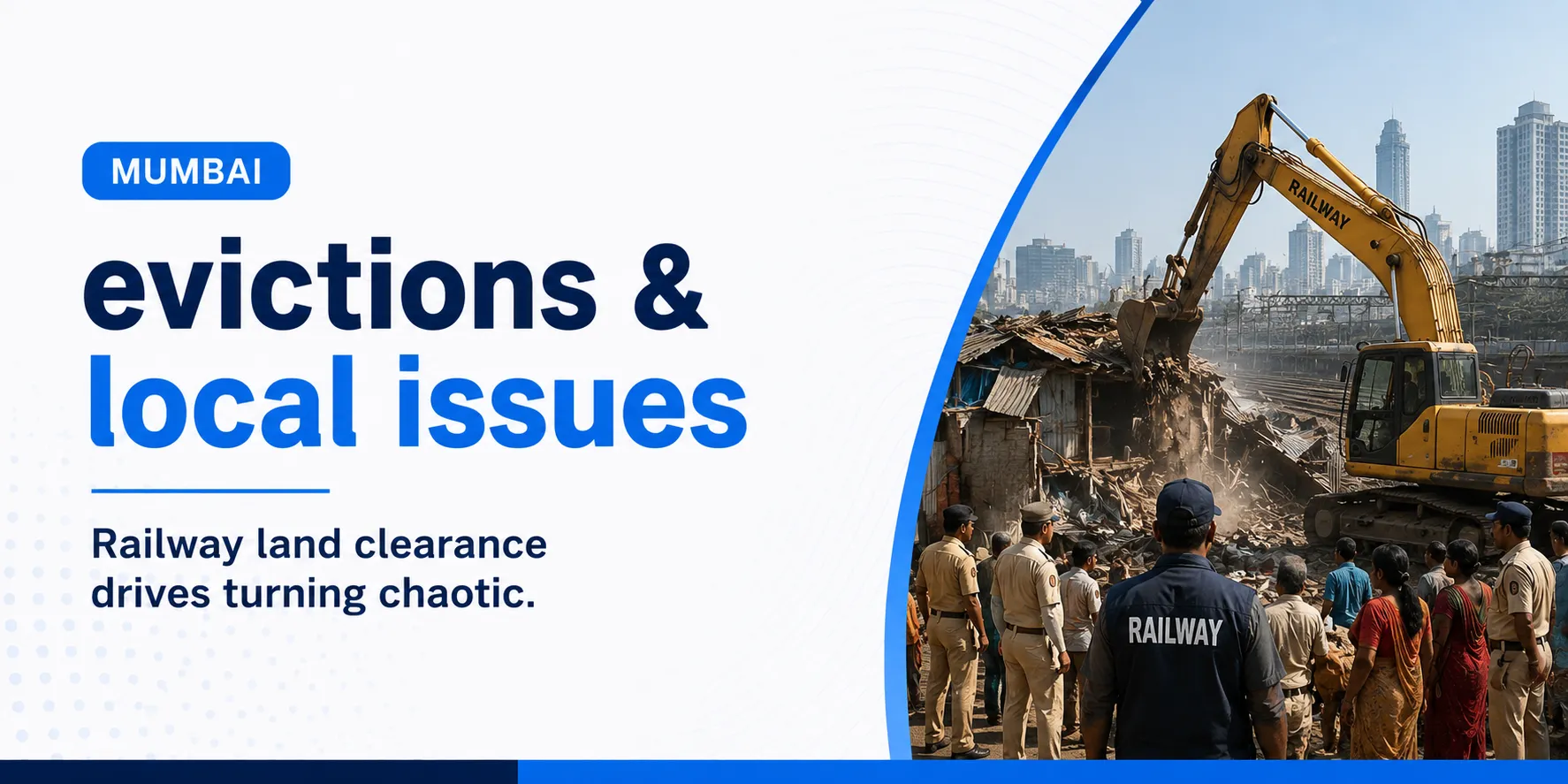
In one of the most significant anti-encroachment operations in recent Mumbai history, Western Railway has launched a high-stakes drive to reclaim prime railway land in Garib Nagar, Bandra East. What was intended as a routine clearance operation has rapidly escalated into chaos, with protests, stone-pelting, lathi charges, injuries on both sides, and political accusations flying thick. For business leaders tracking India’s urban infrastructure story, this episode is far more than a local law-and-order issue, it is a textbook case of the complex trade-offs involved in unlocking India’s economic potential in its financial capital.
The Scale of the Operation
The drive, which began on May 19 and is scheduled to continue until May 23, targets approximately 500 unauthorized hutments built on 5,200–5,300 square meters of railway land. This parcel is valued at nearly Rs 600 crore in Mumbai’s sky-high real estate market.
The land lies dangerously close to active railway tracks, overhead equipment, and critical infrastructure near Bandra Terminus. Western Railway officials state the clearance is essential for:
- Restoring the mandatory safety zone along tracks
- Expanding Bandra Terminus capacity
- Facilitating the addition of 5th and 6th railway lines between Santacruz and Mumbai Central
- Supporting nearly 50 additional originating train services from Mumbai
- Improving connectivity to the upcoming Mumbai-Ahmedabad Bullet Train hub at Bandra Kurla Complex (BKC)
The operation is being conducted under explicit directions from the Bombay High Court, following years of legal proceedings.
What Triggered the Chaos?
On the second day (May 20), tensions boiled over when authorities moved to clear structures, including an alleged unauthorized prayer hall. Protesters gathered in large numbers, leading to stone-pelting at police and railway staff. Police responded with a lathi charge. Reports indicate at least 13 people (including police personnel) were injured, and around 10 individuals were detained. Heavy security deployment including Mumbai Police, Railway Protection Force (RPF), and Government Railway Police (GRP) has been in place, with barricades causing significant traffic snarls around Bandra.
The timing has added fuel to the fire. With Eid just days away and the monsoon season approaching, displaced families are expressing deep anxiety over immediate shelter and rehabilitation. While railway authorities claim that eligible households (identified in earlier surveys) are being provided alternative housing, many residents allege they were either excluded from the survey or inadequately informed.
Business and Economic Implications
1. Infrastructure & Railways Sector This clearance is a positive signal for investors in Indian Railways and related infrastructure plays. Successful execution could accelerate multiple projects, improve suburban rail efficiency (critical for Mumbai’s 8+ million daily commuters), and enhance property values in the Bandra-BKC corridor. Companies involved in railway construction, signaling, station redevelopment, and Rail Land Development Authority (RLDA) projects stand to benefit.
2. Real Estate and Urban Development Prime railway land in Bandra East has massive redevelopment potential. Cleared parcels often translate into commercial opportunities from station retail and offices to integrated transit-oriented development. However, the political and social backlash highlights execution risks that developers and investors must price in.
3. Construction & Labour Markets Short-term disruptions in local labour and logistics are evident. Prolonged unrest could delay related projects. On the flip side, large-scale rehabilitation and new construction required for displaced families could create fresh demand for affordable housing developers and building material suppliers.
4. Broader Mumbai Infrastructure Narrative Mumbai’s transformation into a global financial hub depends on clearing decades-old encroachments that choke critical arteries. Similar drives are likely in other parts of the city and MMR. Businesses in logistics, e-commerce last-mile delivery, and commercial real estate must factor in both the upside of smoother mobility and the downside of periodic social friction.
The Rehabilitation Challenge
A key business and governance lesson emerging here is the critical importance of transparent, timely rehabilitation. When only a fraction of affected families qualifies for resettlement, the gap creates fertile ground for political mobilization and unrest. Successful urban renewal projects elsewhere in India (such as certain Mumbai coastal road and metro-related rehabilitations) have shown that community engagement, clear eligibility criteria, and phased support reduce resistance significantly.
The Road Ahead
Western Railway has reiterated that “railway land cannot remain perpetually encroached, especially in safety-sensitive zones.” The administration plans to fence and secure the cleared area immediately after the drive to prevent re-encroachment.
For corporate India, this episode underscores three strategic imperatives:
- Risk Assessment: Incorporate socio-political and community risks into infrastructure project modelling.
- Stakeholder Management: Proactive CSR, communication, and rehabilitation partnerships can de-risk execution.
- Long-term Optimism: Mumbai’s willingness to tackle hard infrastructure bottlenecks despite short-term pain is ultimately bullish for sustainable economic growth.
As India’s commercial capital races to modernize, the Garib Nagar episode is a microcosm of the larger challenge: balancing rapid development with inclusive growth. How authorities handle the aftermath rehabilitation, communication, and prevention of future encroachments will set the precedent for dozens of similar drives across the Mumbai Metropolitan Region.