Trump and Xi Meet in Washington as Trade and Technology Talks Return to Centre Stage
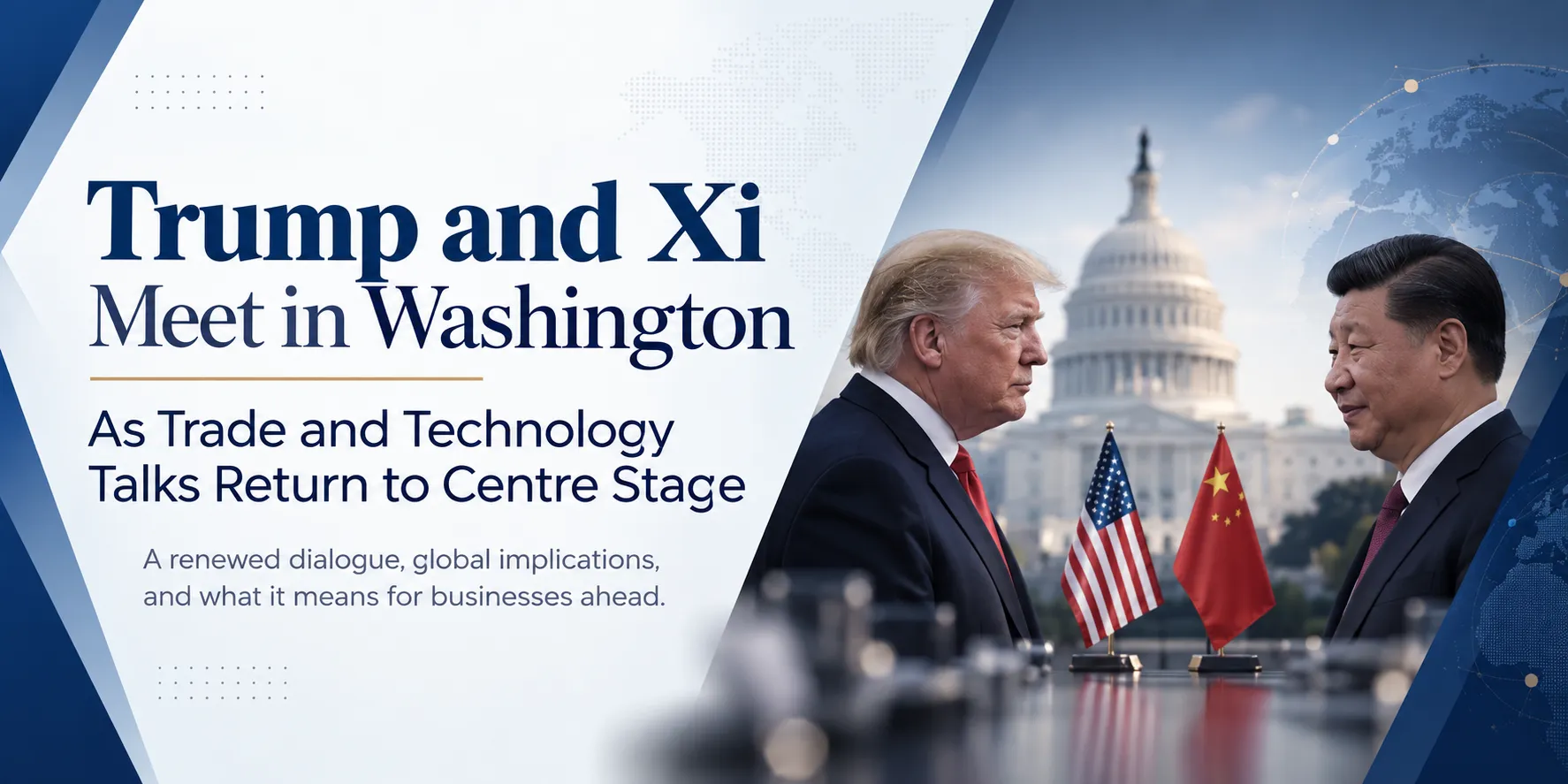
Washington is preparing for one of the year’s most watched business meetings. Chinese President Xi Jinping is due in the United States from 23 to 25 September 2026 for a state visit, with formal talks scheduled for 24 September at the White House. The last time the two leaders sat together was in Beijing in May. This time the agenda is narrower and more commercial. Trade, farm purchases, rare earths and artificial intelligence sit at the centre of the table.
The immediate question is whether they will extend a trade truce reached in late 2025 after talks in Busan, South Korea. That pause is set to expire on 10 November 2026. Without an extension, both sides could slip back toward the high duties that once topped 100 percent and rattled global supply chains. White House officials have played down the chance of a grand bargain. What they want is a signal that the pause can hold long enough for companies to plan.
Preparatory work began before the leaders arrive. On 20 September, United States Treasury Secretary Scott Bessent and Trade Representative Jamieson Greer sat with Chinese Vice Premier He Lifeng in New York for about eight hours of talks at JPMorgan Chase headquarters. Afterward Bessent called the session a successful engagement on trade and artificial intelligence. Greer said earlier ideas of a Board of Trade and a formal AI conversation had been turned into concrete steps. Those two tracks are the most tangible results so far.
The Board of Trade was first floated after the May summit in Beijing. Officials then also spoke of a Board of Investment. The idea is a standing channel where officials can handle farm sales, industrial goods and investment complaints without waiting for another leaders meeting. China has already pledged large agricultural purchases, including a target of 25 million metric tons of United States soybeans a year through 2028, up from a prior target of 12 million tons that Beijing says it met. Chinese buyers took about 1 million tons in the week before the latest talks. Officials have also discussed a possible reciprocal cut in duties on about 30 billion dollars of goods on each side that both capitals treat as less sensitive. China maintains a 10 percent tariff on United States farm imports. Any relief would be watched closely by grain traders.
Aircraft and chips sit in the same commercial file. After the May visit the White House said China would make an initial purchase of 200 Boeing aircraft and buy at least 17 billion dollars a year of United States farm goods. Beijing’s own readout was more cautious and called the results preliminary. On technology, Washington has licensed limited sales of Nvidia H200 chips to a small group of Chinese firms, but shipments have been slow and politically contested. United States officials have said they will not trade away core export controls in exchange for mineral flows they believe China already promised.
Rare earths and other critical minerals remain a pressure point. China dominates processing of materials used in cars, electronics and defence equipment. Washington wants more reliable shipments. Beijing wants fewer limits on advanced American technology. Neither side has signalled a clean swap. That is why the new AI dialogue matters to markets even if it produces no treaty. Nvidia chief Jensen Huang, OpenAI chief Sam Altman and Qualcomm chief Cristiano Amon are expected at the state dinner. Their presence underlines how far commercial rivalry has moved from soybeans and steel into computing power and safety rules.
The setting is not calm. China’s exports have stayed strong even under American duties. More than half of the product categories China sold to the United States this year have grown compared with 2025. A Chinese business delegation is expected to travel with Xi. President Trump is looking for visible wins before November elections. Analysts say Xi may prefer time over a dramatic concession. Taiwan, Iran and energy security may surface, but the business story is whether two governments can keep a pause in place while they argue about chips, minerals and farm cargoes.
For companies the test is practical. An extended truce, a working Board of Trade and a standing talk on AI would not end the contest between Washington and Beijing. They would give exporters, chip makers and mineral buyers a calendar they can use. If the November deadline passes with no signal, the risk premium on the world’s largest trading relationship rises again. The photographs will show a state dinner. The value of the meeting will be measured in whether goods, payments and technology rules stay predictable for a few more months.