
Turning Carbon Dioxide into Edible Protein: Climate Ideas from the Next Generation
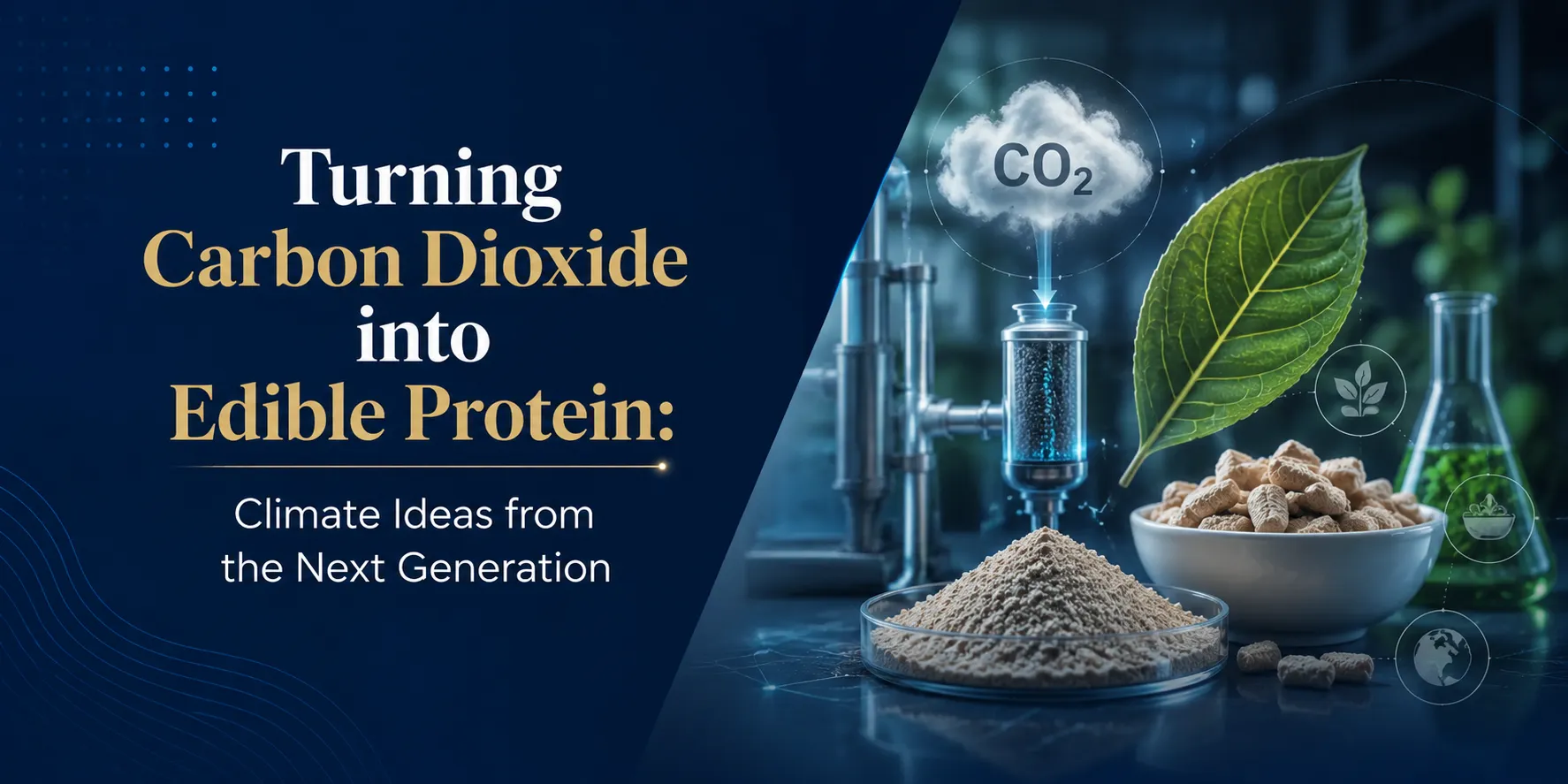
In the third week of July 2026, a quiet but significant announcement emerged from the Indian Institute of Technology Bombay. Groww Foundation, the philanthropic arm of the investment platform Groww, unveiled the first cohort of its INV.ENT programme. From nearly four hundred submissions, the foundation selected nineteen innovation projects involving thirty five student innovators. Among the chosen ideas stood a platform designed to convert carbon dioxide into edible protein. The concept sits at the intersection of climate technology and food security, and it reflects how the next generation of Indian students is approaching some of the planet’s most pressing challenges.
The INV.ENT initiative provides more than recognition. Three teams earned the title of Grand Challenge Fellows and became eligible for milestone based funding of up to twenty five lakh rupees annually. The remaining sixteen teams received proof of concept grants of thirty thousand rupees each. All participants gained access to mentorship and a fifteen thousand square foot innovation space at IIT Bombay’s Desai Sethi School of Entrepreneurship. The programme aims to help early stage ideas move toward viable solutions, with an eventual goal of supporting more than one hundred student teams each year.
The carbon dioxide to protein proposal belongs to a broader wave of climate focused thinking among young innovators. Traditional agriculture requires vast stretches of land, large volumes of water, and contributes substantially to greenhouse gas emissions. A process that captures carbon dioxide and transforms it into protein offers a different pathway. By using microbial fermentation or related biological methods, carbon dioxide can serve as a feedstock rather than a waste product. The resulting single cell protein can be used in animal feed or, with further refinement, in human nutrition. Such approaches reduce pressure on farmland and lower the carbon intensity of protein production.
Around the world, similar technologies have been advancing for several years. Companies and research groups have demonstrated gas fermentation systems that feed industrial carbon dioxide or atmospheric carbon dioxide to specialised bacteria or yeast. These microbes convert the gas into protein rich biomass. Production can occur in controlled reactors, independent of weather and soil conditions. Early commercial facilities already operate at scales of several thousand tonnes per year, and market projections suggest the sector could expand rapidly through the early 2030s. Regulatory approvals in certain countries for feed and food applications have begun to open commercial pathways.
In the Indian context, the IIT Bombay idea arrives at a moment of growing interest in climate technology and alternative proteins. India’s large population and ambitious climate commitments create natural demand for solutions that address both food security and emissions reduction. Student projects of this nature often begin as laboratory scale concepts. With structured support such as the INV.ENT grants and mentorship, they stand a better chance of moving toward prototypes and real world testing. The presence of climate technology alongside other selected projects in artificial intelligence, assistive devices, and social innovation shows the breadth of curiosity on campus.
The platform that converts carbon dioxide into edible protein remains at an early stage. Details of the exact microbial strains, energy sources, or production yields have not been publicly detailed. What stands out is the ambition itself. Young innovators are treating industrial and atmospheric carbon dioxide not merely as a pollutant to be minimized but as a potential resource. This mindset shift from problem to opportunity characterizes much of the next generation’s approach to climate challenges.
As the INV.ENT cohort begins its work in the second half of 2026, the carbon dioxide to protein project will likely face the usual hurdles of technical validation, cost competitiveness, and regulatory pathways. Yet its selection among hundreds of submissions signals that Indian campuses continue to generate ideas capable of linking environmental goals with practical nutrition needs. The story of this particular concept is still unfolding, but it already illustrates how student driven innovation can place India within the global conversation on sustainable protein production.