
Skyroot Aerospace Achieves India’s First Private Orbital Launch with Vikram-1
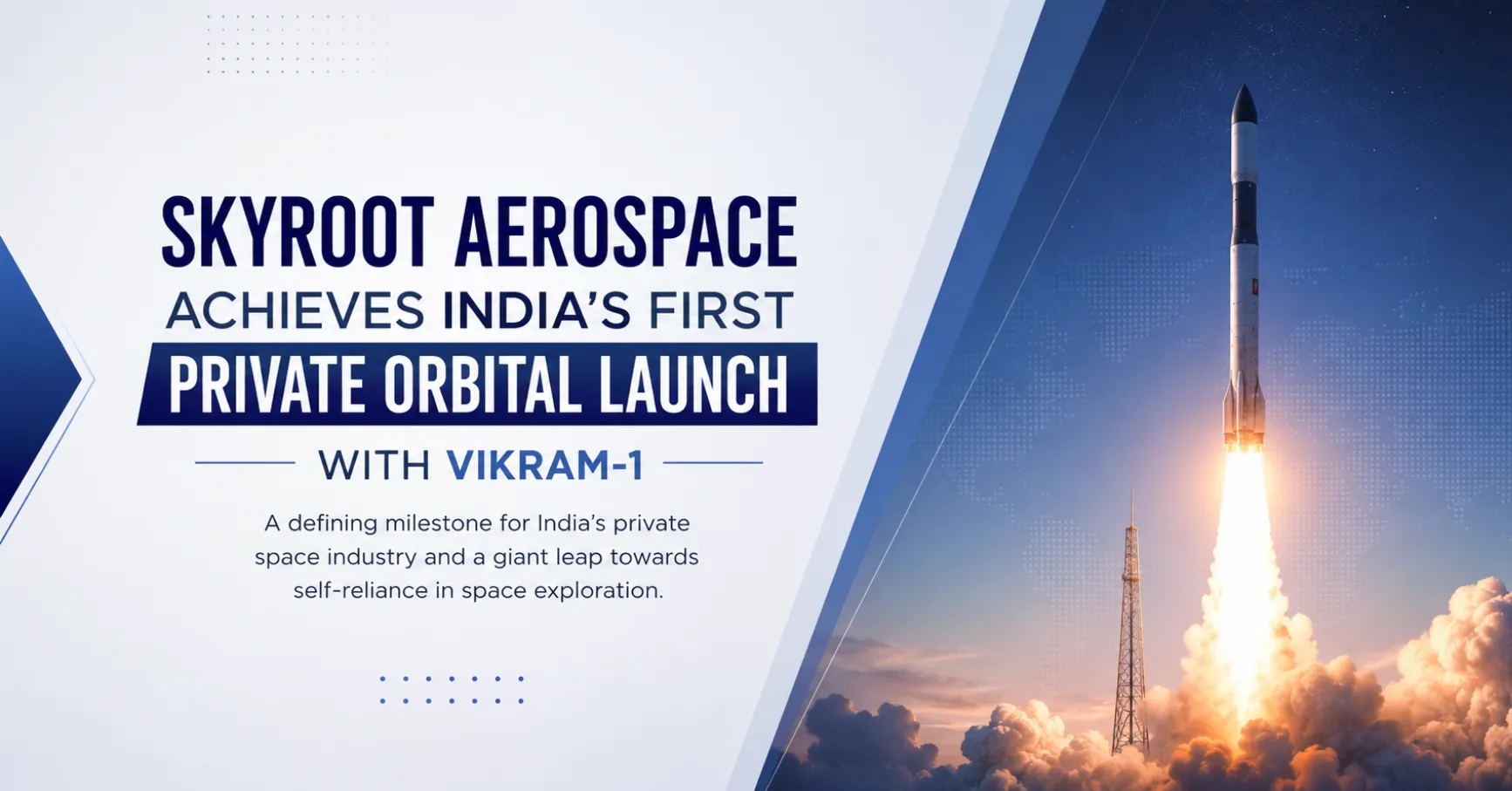
Skyroot Aerospace marked a landmark moment for India’s private space sector on July 18 2026 when its Vikram-1 rocket successfully reached orbit. The launch from the Satish Dhawan Space Centre in Sriharikota made the Hyderabad based company the first Indian private firm to send a domestically developed orbital rocket into space. The mission, known as Aagaman, carried customer payloads and in orbit experiments on its maiden flight.
The Vikram-1 lifted off at 0635 GMT and performed as planned, placing its payloads into low Earth orbit. The rocket is designed to carry up to 350 kilograms of payload and represents years of development by the Skyroot team. Company officials noted that the vehicle was built at a cost of around 70 million dollars with more than 90 percent of components sourced from within India. This high level of domestic content underscored the growing maturity of India’s private space manufacturing ecosystem.
Founders Pawan Chandana and Naga Bharath Daka later met Prime Minister Narendra Modi on July 27 to discuss the achievement. The Prime Minister congratulated the team and described the successful flight as evidence of the rising capabilities of India’s private space industry. The founders shared the challenges they had overcome, including engine testing setbacks and disruptions during the pandemic years, before reaching this milestone. They also outlined plans for the next vehicle, Vikram-2, with a targeted launch window in November.
The success of Vikram-1 places India among a small group of nations with private companies capable of orbital launches. It also aligns with broader national goals of expanding the commercial space economy and encouraging private participation alongside the Indian Space Research Organisation. Government reforms in recent years have opened pathways for private firms to develop and fly their own launch vehicles, and Skyroot’s flight is widely viewed as a tangible outcome of that policy direction.
Industry observers noted that the mission tested not only the rocket’s performance but also the operational readiness of private players to work within the national launch infrastructure. The payloads included experiments and commercial satellites, demonstrating early demand for dedicated small satellite launch services from Indian providers. Skyroot has indicated that future flights will build on the data gathered from this first orbital attempt and aim to increase launch frequency.
The July achievement arrives at a time when global interest in cost effective access to space continues to grow. By completing an orbital mission with a largely indigenous rocket, Skyroot has strengthened India’s position in the commercial launch market and provided a clear example of private enterprise contributing to national technological progress. The company and the wider private space community will now focus on refining systems, expanding capacity and preparing for subsequent missions in the months ahead.