
US Tech Layoffs 2026: The H-1B Visa Crisis and Its Deep Impact on Indian Tech Professionals
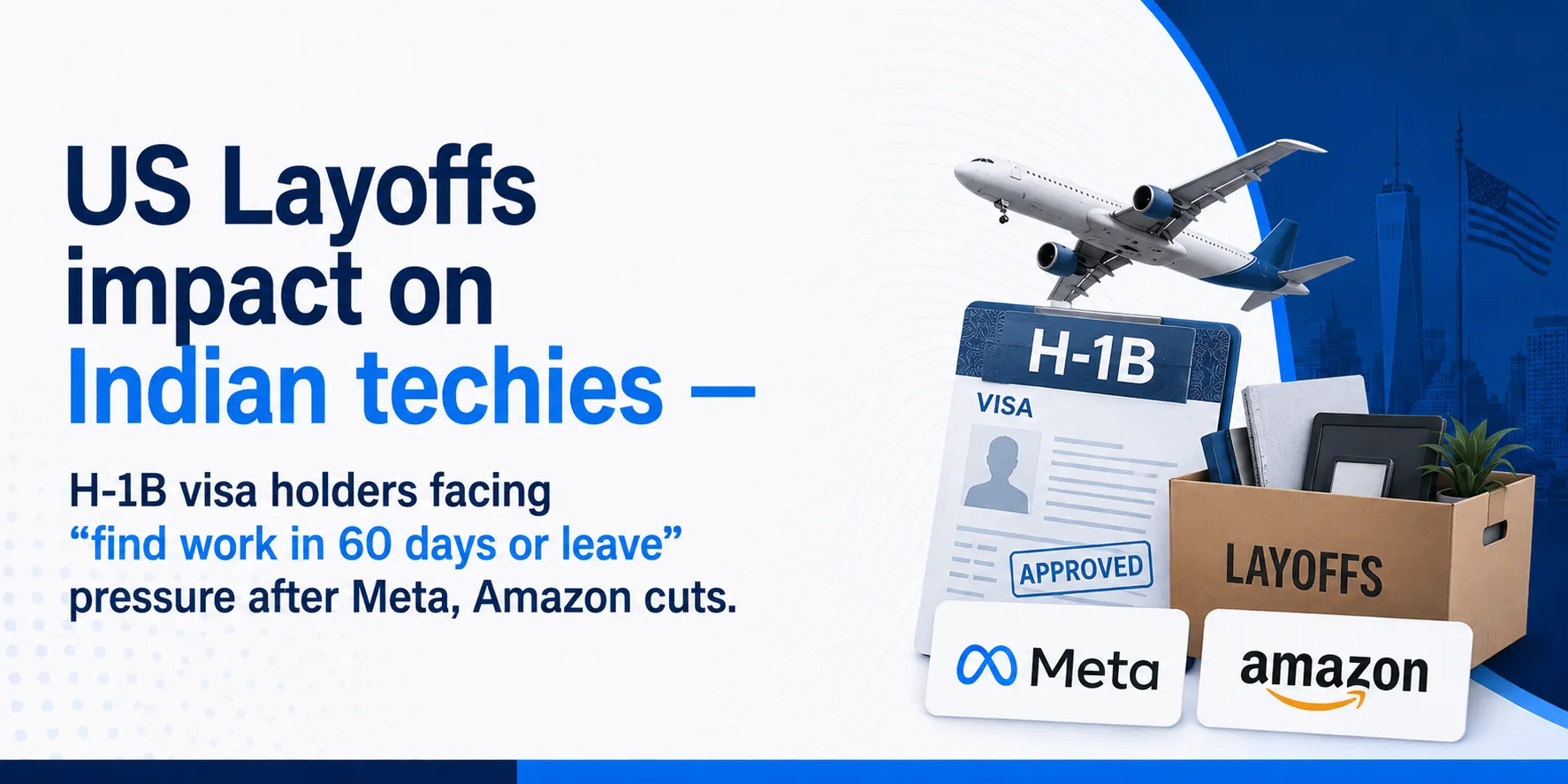
The American dream for thousands of Indian tech professionals has turned into a race against time. Fresh waves of layoffs at Meta, Amazon, and other Silicon Valley giants have thrust H-1B visa holders predominantly Indians into a precarious situation. Under strict US immigration rules, laid-off workers have just 60 days to secure a new sponsoring employer or leave the country. This is not merely a personal crisis; it is a significant business and economic story with far-reaching consequences for India’s IT industry, talent mobility, and global tech supply chains.
The Scale of the Layoffs
2026 has been brutal for the tech sector. Over 110,000–142,000 tech jobs have been cut across more than 140 companies so far this year. Notable recent actions include:
- Meta: Approximately 8,000 jobs (around 10% of workforce) as part of an aggressive AI pivot.
- Amazon: Multiple rounds targeting corporate, AWS, and retail roles, with thousands affected.
- Other players like Oracle, LinkedIn, Cisco, and Coinbase have also announced significant reductions.
AI adoption is a major driver. Companies are restructuring to become “AI-native,” automating roles and flattening teams. While this boosts efficiency and stock prices, it creates immediate turbulence for employees.
Why Indians Are Disproportionately Affected
Indians constitute the largest group of H-1B visa holders (around 70%+ of approvals in recent years). The visa is employer-specific, tying legal status directly to employment. When a job ends, the 60-day grace period begins a short window to find new sponsorship, change visa status, or depart the US.
Many professionals have built lives in America homes, families, children in schools, and long-term green card aspirations (often facing decades-long backlogs). The sudden loss of income combined with visa pressure creates intense financial, emotional, and logistical stress. Reports highlight families scrambling to sell assets, explore options in Canada/Europe, or prepare for an abrupt return to India.
Business and Economic Ripple Effects
1. Talent Return and Reverse Brain Gain for India A significant portion of affected professionals is returning or considering a return. This brings experienced talent back to India with US-domain expertise, leadership skills, and networks. Indian IT firms, startups, and product companies stand to benefit from this influx, potentially accelerating domestic innovation in AI, cloud, and SaaS.
However, not all returnees will easily reintegrate. Salary expectations, lifestyle adjustments, and a tighter Indian job market (already seeing AI-driven efficiencies) could create short-term challenges.
2. Impact on Indian IT Services Giants US-based Indian IT firms are also trimming onsite roles. Clients are demanding cost optimization and AI-led delivery models, pushing more work offshore. This could lead to:
- Slower growth in onsite billing.
- Accelerated shift toward higher-value services (AI consulting, digital transformation).
- Increased pressure on margins in the short term.
3. Broader Implications for India’s Economy
- Remittances & Consumption: A temporary dip possible as professionals relocate.
- Startup Ecosystem: Returning talent with capital and experience could boost entrepreneurship.
- Skill Development: Heightened focus on upskilling in AI/ML, cybersecurity, and emerging technologies to remain competitive globally.
- Policy Angle: The situation underscores the need for stronger domestic tech opportunities and diversified global mobility pathways.
4. Opportunities for Forward-Looking Businesses
- Indian Companies: Aggressive hiring of returnees, creation of “returnee-friendly” roles, and investment in AI training programs.
- Global Firms: Exploring hybrid models with stronger India centers to reduce H-1B dependency amid US policy uncertainty.
- Investors & VCs: Funding AI adaptation solutions and talent relocation support services.
- HR & Immigration Tech: Demand for tools that help with visa transitions, global mobility, and compliance.
Strategic Lessons for Business Leaders
The H-1B crisis highlights a key truth in today’s global talent market: over-reliance on any single geography or visa regime is risky. Companies must build resilient, distributed teams and invest in continuous learning.
For Indian professionals, the message is one of resilience and adaptability. Many are leveraging networks on LinkedIn, Blind, and alumni groups to explore options swiftly. Those who upskill quickly in AI and high-demand areas will emerge stronger.
The Road Ahead
As Big Tech continues its AI-driven restructuring, the pressure on H-1B holders is unlikely to ease immediately. However, every crisis creates opportunities. India has a historic chance to convert this talent outflow into a strategic advantage turning “brain drain” into “brain circulation.”